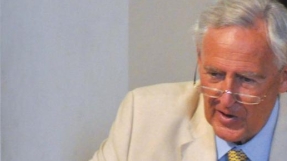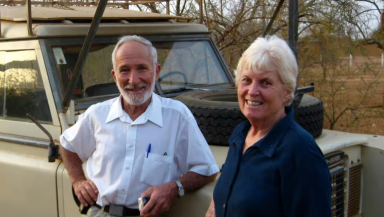
A Christian missionary who was held captive by an Al Qaeda-linked terrorist group has shared details of his ordeal, where he was kept in brutal conditions that saw him face extremes of heat and cold, scorpions, and scurvy.
Incredibly, Dr Ken Elliott, who was 82 when taken hostage, would be forced to endure all this for seven years before he would be released. But, when asked how could an octogenarian possibly manage to survive all this, and for so long, he has a simple answer—God.
They served for decades in medical missions in the West African country of Burkina Faso and were known for their dedication to ensuring that every patient who came through the door received the same quality of treatment as everyone else, no matter their faith or colour, or what they could pay.
This earned them the respect of the Muslim majority making up their patients, and saw them accepted as belonging to their community, rather than outsiders from the West trying to impose their ideas. Hence, when they were kidnapped locals of both faiths were outraged.
Jocelyn was released after a few weeks, leaving Ken to bond with his lone fellow hostage, Julian Ghergut, a Romanian.
"When I met him," Ken told the news network, ABC, "he had been a captive for nine months. 'How can anyone stand this for nine months?' I asked myself. I ended up being there for seven years and four months."
As well as the threat posed by his captors and the brutal desert conditions, Ken's health deteriorated due to the poor diet. With no source of Vitamin C, his legs began to swell, leaving him unable to walk and in constant pain.
"I'd only seen one case of [scurvy] in my medical career and that was me," Elliott told the UK's Keswick Convention.
Despite his pleas, his kidnappers said they didn't have any supplements they could give him, and it was only when their leader returned to discover Ken's condition that he finally received enough tablets to restore his health.
His captors also made attempts to convert Ken to Islam over the course of his captivity, but Ken remained steadfast in his faith, and never let his long, lonely time in the desert cause him to lose hope.
"The Lord has been good to me. There's no way I was going to dishonour Him by converting to Islam," he told the ABC. "Or even pretending to convert."
When asked by his interviewer whether he ever thought God had abandoned him, Ken's response summed up exactly how been able to emerge from seven years of brutal conditions and isolation unbroken in spirit and with his faith in God intact.
"Never. No. He was always there," he said.
There is uncertainty around the circumstances that led to his release in May 2023 and whether a deal was made, but Ken doesn't see any mystery at all.
"We believe that the only reason why we were released," he said, "was because there were a few hundreds, if not thousands of people praying for it. And we believe in prayer."