My late grandfather seldom talked about his role in the second world war. I know - from other sources - that he was stationed in Burma; that he fought in close combat; that undisclosed 'things' happened out there which made it difficult for him to return to normal life. But the details beyond that were sketchy, and he clearly wanted it that way.
He had one, old, crumpled photograph of his platoon. I'll never forget two things about it. First, the men were posed, smiling, in poses reminiscent of a football team photo. Had they not been armed, you might have thought they were enjoying recreation. The second thing I remember is that one of the men was holding a dog. I've no idea how they found it, but it only added to that romanticised idea of the band of brothers; off on an adventure in a strange land.
Of the men in that photograph, only one man made it home. And if he hadn't, you wouldn't be reading this now.
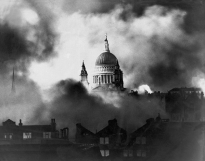
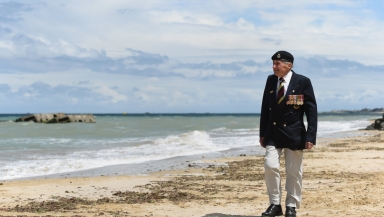
As the world remembers that horrific, tragic, history-shifting war again through the commemoration of D-Day, 70 years ago, it's perhaps difficult to know quite how to feel. The distance brings with it a certain sense of detachment; peacetime turns the reality of war into an abstract concept. We know all the things we 'should' say: 'lest we forget'; 'they shall not grow old,' and all the rest. But if I'm really honest, as time passes and those heroic veterans slowly die out, the act of remembrance grows a little weaker with every passing year. An anniversary might mask that, but as a rule our culture is less and less connected to the terrible events of 1939-1945.
What does that look like I wonder, 30 years from now, when there are no surviving soldiers; when D-Day is a century ago? Might the poppy become a historical relic? Will we fail to heed that long-uttered warning, and forget?
The message of remembrance has always been double edged. On the one hand, we honour those who gave their lives for us; on the other, we agree to learn from history's greatest human disaster. Neither of these should be lost to us; it's the responsibility of the younger generations to ensure that these two important ideas remain ingrained in British culture.
How do we do that? As families, communities, churches and more, we can carry on an oral tradition; a historical narrative that communicates not only facts but also passion. Their deaths were not in vain; the freedom we enjoy was earned by their sacrifice; these things must never be allowed to pass again. If we invest in that story, it has a much better chance of remaining aflame.
But of course, that kind of urgency and ownership begins with us, and has a profoundly spiritual element. Today then, I sit with that old photograph, wonder about that dog, and thank God for the victories won by my literal forefathers. I ask for His help in communicating that story to my own children, and exploring with them the importance of continued peacemaking. It is the only fitting tribute I can bring to my grandfather and the men alongside him in that photo who never made it home.
Lest we forget.