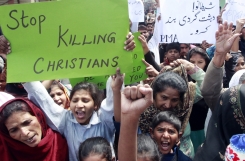
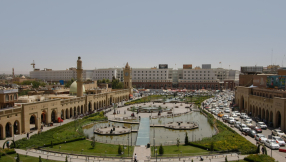
The former Bishop of Rochester, Michael Nazir-Ali, has called on the Pakistani government to send in the army to root out terrorists and said the United Nations must address the plight of persecuted Christians in the Islamic world.
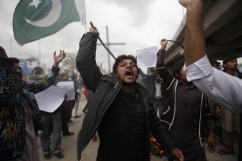
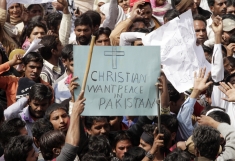
Dr Michael Nazir-Ali's spoke to Christian Today in response to the bombings in Lahore at the weekend, in which 17 people were killed and nearly 80 injured.
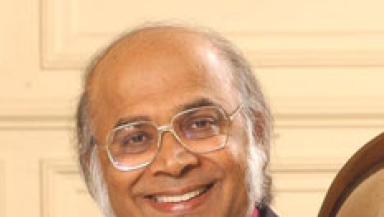
Born in Pakistan, Nazir-Ali was Britain's first non-white diocesan bishop. Since stepping down from Rochester in 2009, he has served as president of the organisation Oxtrad, building up church leadership in countries where Christians are persecuted such as Iran, Iraq, Pakistan and Nigeria, as well as working in advocacy and human rights.
He is visiting Pakistan this Friday where the Forman Christian university in Lahore is attended by equal numbers of Muslims and Christians. He will be teaching at the Christian theological college.
Before leaving, he made an urgent plea for immediate protection for churches, communities, schools and hospitals: "There is such a lot that the Christian community does in Pakistan, in spite of the terrible persecution and discrimination that it suffers. All of these are sitting ducks for any kind of terrorist to do whatever they like. All of these places are used by large numbers of people."
Protection had to go beyond the police and to involve the military and even the army, he added. "It is a daunting task. It is easier to say than to do."
Nazir-Ali, who was ordained in 1976, worked in Lahore in the community where Sunday's bombings took place, as well as in Karachi. He was the first Bishop of Raiwind in West Punjab, and the youngest bishop in the Anglican Communion, when he was granted refuge in England in 1986 when his life was at risk, thanks to the intervention of the then Archbishop of Canterbury, Dr Robert Runcie.
Just 2 per cent of Pakistan's population is Christian but large numbers live in Lahore.
"There are scores of churches there of every kind and a very large Christian population," he said. "The government of Pakistan really needs to deal decisively with terrorism, not with one hand tied behind its back, not with qualifications or distinguishing between one extremist group or another. This has to be done decisively, once and for all, not just for the sake of the Christians but for everyone in the country."
Shia and Ahmadiyya Muslim minorities are also persecuted in Pakistan.
The roots are political, he said. Sunday's bombings were by a Taliban offshoot, and the Taliban were tolerated in Pakistan for a long time because they were seen as an insurance policy against an India-friendly government in Afghanistan. Extremists have also been tolerated because of their role in furthering the Kashmiri separatist movement.
Nazir-Ali said: "I can see the government's interest in having a friendly government in Afghanistan but this cannot be in any way at the expense of the security of the nation itself." The government now has no choice but to deal decisively with all extremists, he said.
The problems were exacerbated by a background of the teaching of "hate" in madrassas and sometimes even in mosques, the bishop added. "This must be stopped. These text books must be revised." They were already being phased out in many places, but this needed to be accelerated, he said. "There has to be reform of religious education as a whole. If people grow up with a teaching of hate, not everyone will carry out terrorist attacks but it makes them more likely."
Finally, he called for the United Nations Security Council and the United Nations Human Rights Council to address formally the plight of Christians in the Islamic world.
"Persecution of Christians is now systemic. There are large numbers involved. What is happening to them is horrific. If this had happened to any other group, it would have caused international intervention many times over."