A call for greater engagement with broadcasters, newspapers and social media platforms has come from the executive director of an organisation promoting religious understanding in the media.
Anna McNamee of the Sandford St Martin Trust told an audience at Salisbury Cathedral that media outlets should take their ‘civic duty’ seriously, and that readers and viewers should take an active role in holding them to account and in engaging with viewpoints different to our own.
McNamee, an award-winning journalist and broadcaster, explained, “We need to engage and get involved. People can react with hostility when someone introduces different facts or opinions. But in our pursuit of the truth, we need to get comfortable with this and be confident engaging with people who think differently from us.
“Be brave, ask questions, whether out loud or part of an internal dialogue. Employ critical thinking. Be guided by curiosity. Seek out fellow travellers.
“Hold your media providers to account. Responsible media sources will correct errors or mistakes. They will be transparent about their funding, their biases and how they get their information. They should be representative of the people, communities and societies they serve.”
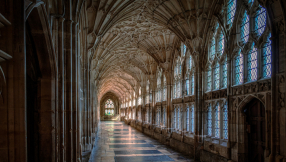
Anna McNamee, giving the first in a series of Lent lectures at the iconic Wiltshire cathedral, said that people should insist that media providers take responsibility for the impact on audiences of the information they are disseminating, if necessary, informing legislators and regulators.
She explained, “When it comes to the media, despair and denial is not a workable strategy. Now is not the time to despair, but to act. At the core of democracy is the principle of citizen participation. That’s a group activity, not the monopoly of any one person, or any one lone social media influencer.”
The experienced journalist also spoke of the important role of media in our society. “Done well, media opens our windows to the world. It expands our horizons – not just to what’s happening, but to what people think, what they believe, what they say and do, how they act.
“It’s a means for us to communicate with each other, and also with our leaders, to hold our politicians and representatives accountable. It’s a channel through which we can keep each other informed, discuss and try to find common ground about what we as a society think is important, the values we hold.
“Good, serious journalism underpins this by providing us with tools and information that we can use when we are building our opinions, our lives, relationships, the communities, the societies we want and need to flourish and grow.
“In short, if we are going to engage and participate in our democracy, then the media is indispensable.”
Anna McNamee was speaking as polls show that levels of trust in the media are low, and media outlets are under pressure globally from economic and political pressures.
But, she emphasised, “as complicated, as imperfect and as frustrating as they can be, we need newspapers, broadcasters and social media platforms which take their civic roles and responsibilities seriously. We need outlets that will undertake to provide us with trustworthy facts and information, which will nurture our imaginations, our hearts and minds.
“We should expect our media to respect our fundamental values. Our belief in the dignity of all human beings - that through collaboration, and co-operation, we can make the world a better place, and that this sort of work has innate meaning and value.”
She added, “While the truth may set you free, publishing it costs time, effort, and money. Buy a newspaper, take out a subscription, pay your licence fee.”
The Sandford St Trust promotes and celebrates excellence in religious broadcasting and makes prestigious awards to the best programmes made on faith issues.
Rev Peter Crumpler is a Church of England minister in St Albans, Herts, and a former communications director with the CofE.