Donald Trump's 'marmite' tendency to polarise is highlighted in a dramatic new poll showing the extent of white evangelical's loyal approval of their president.
Just two per cent of black voters think life has got better under the Republican's presidency compared to nearly half of white evangelicals.
In general 40 per cent of Americans say life has become worse under Trump and that figure rises to 63 per cent among black voters. But for white evangelicals just 26 per cent say life has got worse and 49 per cent say it has improved, according to a ComRes poll commissioned by the new opinion website UnHerd.
'This very much confirms Trump as the Marmite President, said editor Tim Montgomerie. 'We know he has polarised opinions and over on this side of the Atlantic, we read his tweets which paint him as an insensitive and impulsive maverick, but there are clearly plenty of people in the US who feel his Presidency is benefiting them.'
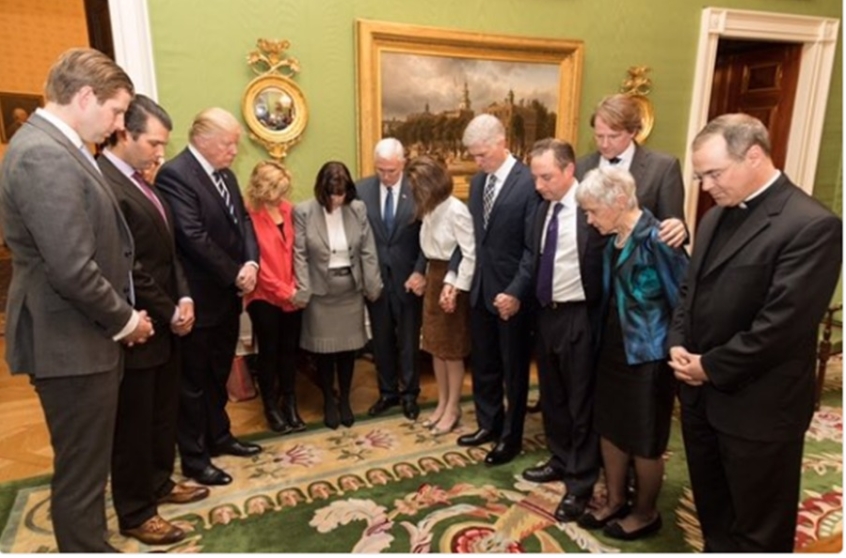
The poll comes ahead of a new documentary, Trump and the Evangelicals, released on Monday by the website which focuses on evangelicals' loves of Trump.
When asked about a string of policies Trump has worked on, white evangelicals were consistently more approving than the rest of Americans.
'Our interviews for the documentary found compelling consistency among white evangelicals from different walks of life and areas of the country', said Katie Harrison, who presents the Trump and the Evangelicals documentary. 'None of the people we met would have voted for Hillary Clinton. She ran a campaign which completely excluded them and she lost their confidence, if indeed she had ever had it.
'And the death of Justice Scalia focused anti-abortion campaigners on the Supreme Court appointment. We met plenty of people who had voted reluctantly for Trump, as well as those who championed him. Many social conservatives seem to have held their noses and voted for him, on the basis that they can tolerate four or eight years of his dubious behaviour in return for an anti-abortion Justice on the bench for the next 40 years.'
She added: 'We heard that people who vote primarily "as a Christian" are more likely to be white and therefore don't really think about their colour as an identity when it comes to politics.
'Black people, on the other hand, especially in America, are much more likely to have inherited a political engagement which directly relates to colour, through the civil rights movement. A black Christian goes to the polls knowing they're black and often vote in order to bring about change. White evangelicals seem to think they're only voting along religious lines, when in fact many of them are voting to protect their way of life, resisting immigration and social liberalism. They vote to keep things the way they are.'