Look ma, no more bad memories: Scientists find new way to erase negative thoughts

 (Pixabay)

What if you can erase the bad memories you have in your brain—like a very painful heartbreak or the mental image of a family member passing away?

This scientific process of forgetting, once seen only in sci-fi movies like "Eternal Sunshine of the Spotless Mind," may soon be a reality.

Scientists from the University of Dartmouth in New Hampshire, United States have discovered a new method of intentionally blocking certain memories from our minds.

In a study published in the scientific journal "Psychonomic Bulletin and Review," the researchers detailed an experiment where they successfully erased memories from the human brain by changing the "context" surrounding these memories.

In its simplest terms, "context" refers to circumstances surrounding a particular event. The researchers said this is quite significant in how memories are "organised and retrieved" by the brain.

To reach this conclusion, the scientists subjected 25 volunteers ranging in age from 19 to 34 to a memory test. The participants were particularly shown a list of words that they were told to either memorise or forget.

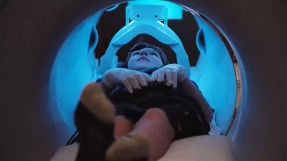
In between the words, pictures of natural landscapes were also shown to the participants, to test if they would associate these images to the words. While the experiment was going on, the researchers observed the volunteers' brain images using functional magnetic resonance imaging (fMRI).

The participants were then asked to recall the words. Those who successfully did so showed the same neural patterns associated with context, or the images, when recalling the words, highly suggesting that the word and the images have become intertwined in the brain.

Conversely, those who forgot the word did not repeat this neural pattern, indicating they weren't able to associate the words with the images.

In a statement, lead researcher Jeremy Manning tried to simplify the results of their study.

"It's like intentionally pushing thoughts of your grandmother's cooking out of your mind if you don't want to think about your grandmother at that moment," Manning said, as quoted by CBN News.

"If you don't want to think of the colour blue, you think of green things instead," he added.

Manning further said that the results of his team's research may be used to help those who are hounded by bad memories, such as soldiers who returned from war-torn areas and are suffering from post-traumatic stress disorder (PTSD).


related articles
\'Neuroscience bombshell\': Human brain can store memories as extensively as the entire Internet
'Neuroscience bombshell': Human brain can store memories as extensively as the entire Internet

'Neuroscience bombshell': Human brain can store memories as extensively as the entire Internet

Has the Church succumbed to half-brained thinking?

Has the Church succumbed to half-brained thinking?

\'Eternal Sunshine of the Spotless Mind\' made real: Psychologists may soon be able to wipe out bad memories
'Eternal Sunshine of the Spotless Mind' made real: Psychologists may soon be able to wipe out bad memories

'Eternal Sunshine of the Spotless Mind' made real: Psychologists may soon be able to wipe out bad memories

\'Game-changer\': Pentagon developing brain implant to allow humans to communicate with computers
'Game-changer': Pentagon developing brain implant to allow humans to communicate with computers

'Game-changer': Pentagon developing brain implant to allow humans to communicate with computers

Sci-fi turns real: Scientists successfully upload plane piloting skills into human brain

Sci-fi turns real: Scientists successfully upload plane piloting skills into human brain

News
Church of England directs £600,000 towards clergy mental health and financial support

The funding package includes new grants for two national charities working with clergy facing psychological strain and financial pressure.

St William shrine fragments return to York Minster after 500 years underground

Fragments of a long-lost medieval shrine honouring St William of York have returned to York Minster for the first time in nearly 500 years, marking a major moment in the cathedral’s history and a highlight of its programme for 2026.

New research sheds light on why women are more religious than men

Gender gaps were found to narrow in line with degrees of modernisation, secularisation, and gender equality. But, the paper finds, the "gap does not vanish entirely – even in highly secular countries women remain more religious than men".

Prince and Princess of Wales visit Lambeth Palace to meet new Archbishop of Canterbury

The Prince and Princess of Wales have paid an official visit to Lambeth Palace.