Archaeologists have found rare coffins dating from Anglo-Saxon England which shows a community of early Christians that buried their dead in hollowed-out tree trunks.
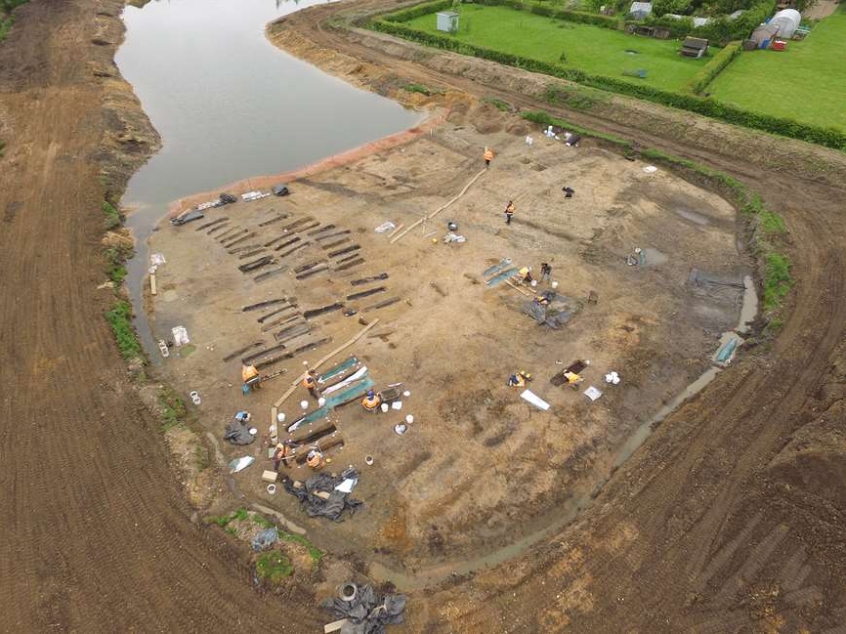
The find of tree trunk coffins and graves lined with plank was made at Great Ryburgh in Norfolk by archaeologists from the Museum of London (MOLA) working with Historic England.
The excavations have been taking place in advance of developing the site as a conservation area, fishing lake and flood defence system.
It is because the valley has been so waterlogged for so many centuries that the 81 coffins dating from between the seventh and ninth centuries have been preserved.
The discovery also of remains of a timber chapel has persuaded researchers that these were Christian burials. In addition, the coffins were lined up east-to-west in accordance with Christian tradition, Historic England reports.
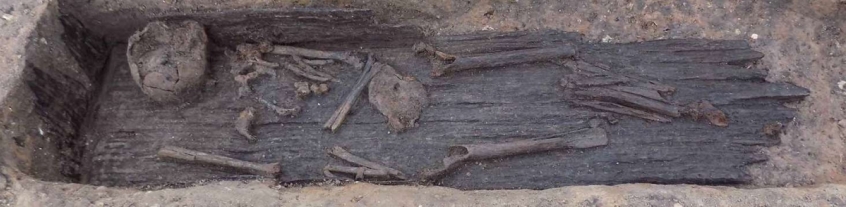
Although historians have known of the existence of these types of coffins, these are the first to have been found from the Anglo-Saxon period, more or less intact.
In a tradition thought to have been adapted from the pre-Christian pagan era, the trees were felled, split along the trunk and then the log base hollowed out to take the body while the top served as the lid.
Historic England reports: "Although they aren't decorative, it would have taken considerable effort to hollow a single coffin, an estimated four man days. The fact that evidence for similar burial rites is also found in earlier cemeteries may signify the blending of pagan and Christian traditions."
Duncan Wilson, chief executive of Historic England, said: "These rare and exceptionally well-preserved graves are a significant discovery which will advance our understanding of Middle-Saxon religious beliefs and rural communities. This cemetery has been revealed because under the current system, archaeological surveys are required before work on a sensitive site starts. This site has immense potential for revealing the story of the community who once lived there."
James Fairclough of MOLA said: "The combination of acidic sand and alkaline water created the perfect conditions for the skeletons and graves to survive, revealing remarkable details of Christian Anglo-Saxon burial practices."
Gary Boyce, who owns the land, Wensum View, where the graves were found, said: "It's really exciting to have such a rare and important heritage site on my land. We set out to create a lake to maximise conservation and biodiversity, to alleviate flooding in the river valley and create a new spot for anglers to fish, and along the way have revealed the hidden secrets of the area's past."
The discoveries will be put on displacy at Norwich Castle Museum. DNA research will now take place to find out about the people buried there, such as where they came from, whether they were related and what their diet and health were like.