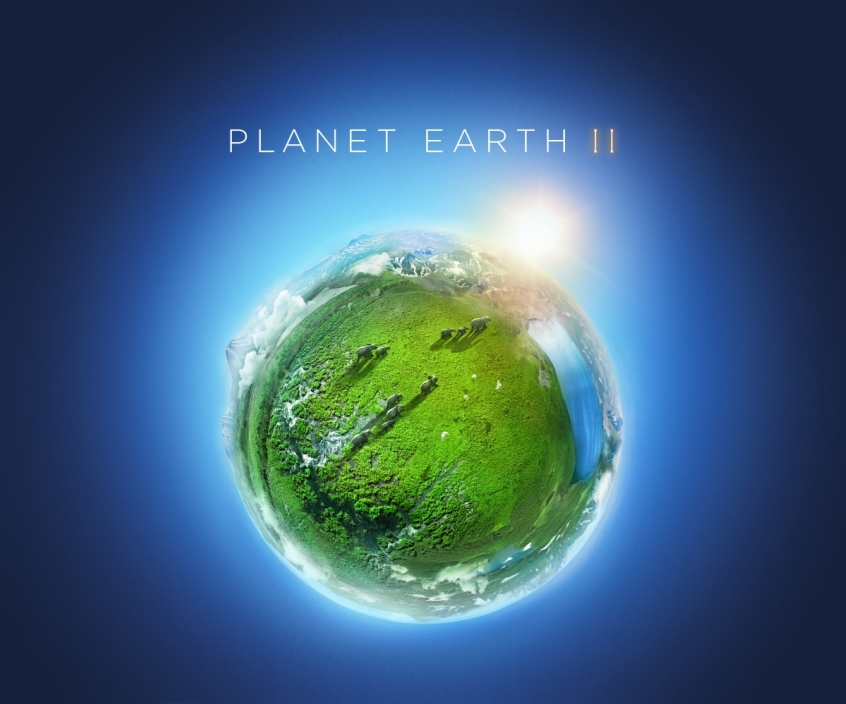
'Planet Earth II', the BBC TV show has been delighting millions for the last six weeks in the UK (Sorry Americans, you get it next year on BBC America), almost constantly trending on Twitter and prompting many to ask on a Monday morning: "Did you see those baby turtles, though?!"
The show brings the latest in camera technology, phenomenally high production values, years of patience, and the inimitable narration of Sir David Attenborough together in a glorious ode to the home we call Planet Earth. After what has been a difficult, depressing and divisive year for many, this late entry to 2016 has shone a proverbial light into a dark world, and showed us that television can give us a glimpse of trancendence.
The show also has a lot to teach the Church. Or rather to remind the Church. Planet Earth II is not religious programming as such, but it celebrates two things that have long been at the heart of Christian faith: wonder at the glory of the world, and a care for its conservation and restoration.
Lost in wonder
Using ground-breaking new techniques, the show has raised the bar for nature programmes, and showed us things we've never seen before. We're suddenly granted an intimate glance into the lives of creatures of all shapes, sizes, and habitats. We soar with eagles through mountain heights, swim with a sloth desperately searching for a mate, and traverse grassland plains with mighty, Lion King-scale assemblies. Dancing bears, flamboyant flamingos, ambitious ibeks, daring baby iguanas and boisterous bobcats are just a few of the creatures who graced our screens. We witness real drama too: the world's creatures don't all live in harmony, but inevitably viewers take a side, and cheer as the hunted escape, or as the hungry find their dinner. The final episode gives us Bourne-style shots of a gang of monkey thieves leaping across rooftops in Jodhpur, India, because why not?
The reaction of many, if Twitter is anything to go by, as simply been one of 'wow!' The beauty, and the immense level of detail that we witness in the show inspires wonder. I couldn't help but think of God's speech at the end of the book of Job, where He questions through a whirlwind and takes Job on a poetic tour of the depth of creation. It's a vast, majestic passage - consider these verses:
"Do you know when the mountain goats give birth?
Do you watch when the doe bears her fawn?...The wings of the ostrich flap joyfully,
though they cannot compare
with the wings and feathers of the stork.
She lays her eggs on the ground
and lets them warm in the sand,
unmindful that a foot may crush them,
that some wild animal may trample them.
She treats her young harshly, as if they were not hers;
she cares not that her labor was in vain,
for God did not endow her with wisdom
or give her a share of good sense.
Yet when she spreads her feathers to run,
she laughs at horse and rider...Does the hawk take flight by your wisdom
and spread its wings toward the south?
Does the eagle soar at your command
and build its nest on high?
(Job 29.1, 13-18, 26-27)
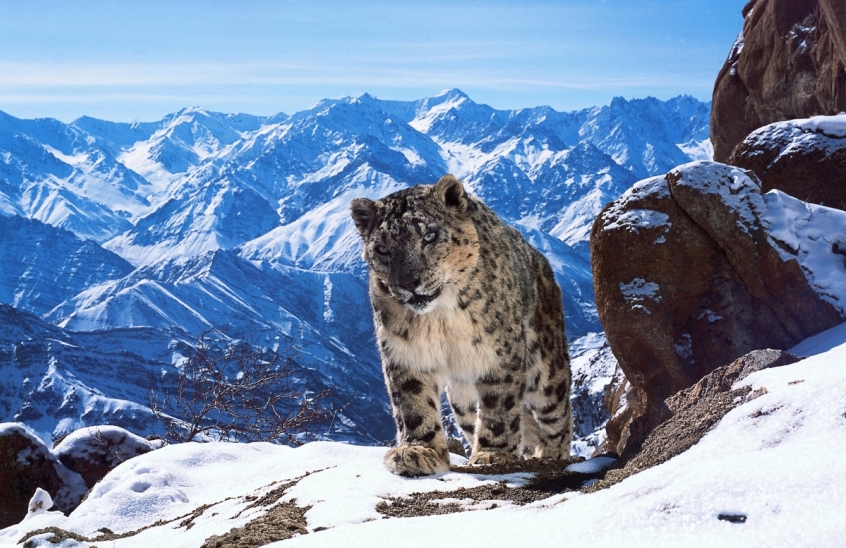
God's speech doesn't answer the many difficult questions and realities that Job faces, but it does open his eyes to something else: a whole world that Job cannot see, an orchestra of life at play, all created, cared for and loved by God. Job and the reader are invited to look up and look around at creation which itself declares the glory of God.
Thanks to Attenborough and his team, our eyes have been opened to seeing things that Job likely never even dreamed of seeing. There's more to discover, more to delight in; while we go about our busy lives so does the rest of nature, every creature living its own story. Just thinking about that reminds us that there's more going on in the world than our worries, that there is one who made all things, and who cares deeply about all things.
Saving the world
Another important theme of Planet Earth II is humankind's influence on creation. The show warns us that many environments are dramatically shifting, reshaping the lives of many creatures including our own. Humankind is often directly, or indirectly, the reason for that change, and the consequences for many are tragic. When habitats are destroyed, then so is the wildlife for whom that was once a home. The show isn't weighed down by environmentalist ranting, but it does make the space to make warnings and pleas at important points. The final episode, 'Cities', shows how modern City-building has altered life for animals, sometimes in good ways, other times in fatal ones, including those adorable but vulnerable baby turtles.
Closing the show Attenborough notes: " The ingenuity with which we continue to reshape the surface of our planet is very striking. But it's also sobering. It reminds me of just how easy it is for us to lose our connection with the natural world." He implores the audience: "It is, surely, our responsibility to do everything within our power to create a planet that provides a home not just for us, but for all life on Earth".
Surely everyone can agree? Christians should care for the world, because God cares for the world. All of creation is connected, and our choices have consequences. We have the power to do good with our resources, and the Church can lead the way in that. The picture we get in Eden is, after all, one of gardeners, living in harmony with the world around them.
As Planet Earth II shows us, the world is full of wonder, far more than we know. Let's thank God for that, for the rich abundance of life, and seek to care for it as much as he does.
The complete series of Planet Earth II is available now on BBC iPlayer. The show premieres on BBC America on 28 January 2017.