On this date in 1963, John F. Kennedy was assassinated and, so the cliché goes, America lost its innocence.
But was that such a cliché after all? Though iconic, Kennedy was, like many of us, deeply flawed. Yet his all-too-brief presidency represented a sense of optimism in the US and around the world.
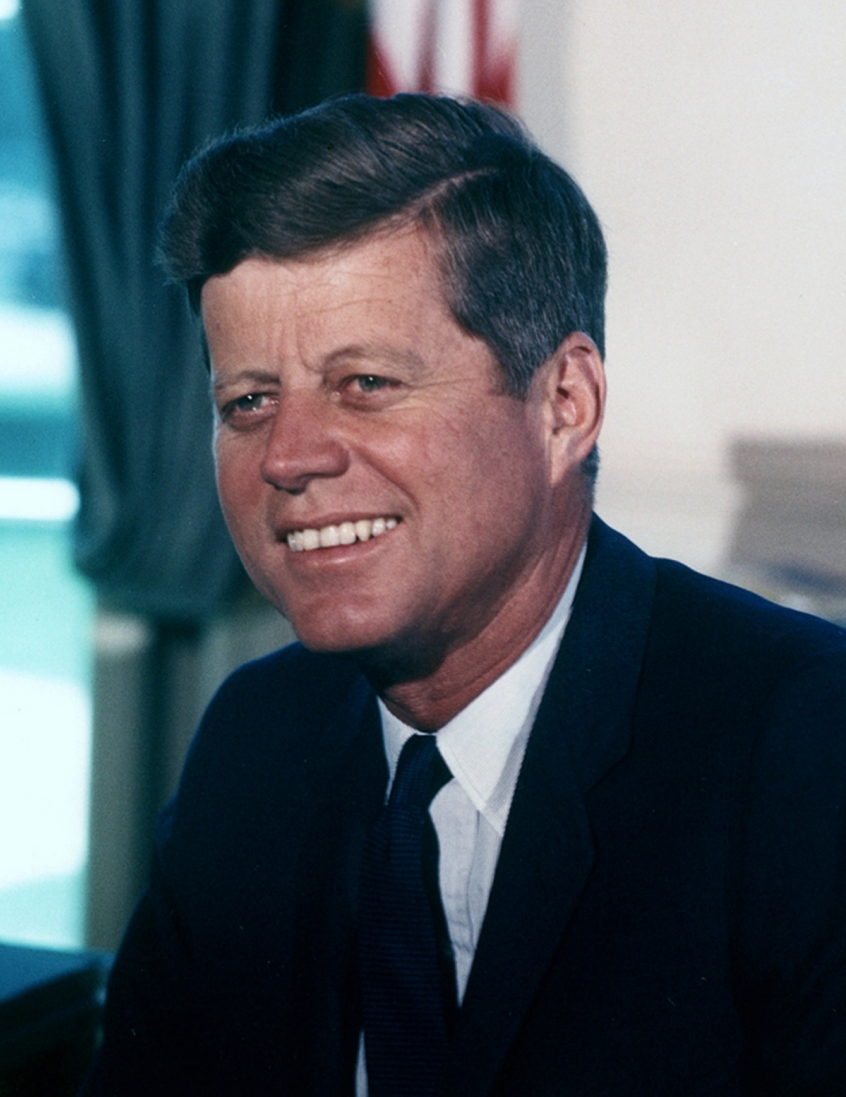
Contrast that with the reign of Donald Trump, and you seem to conjure images of two wholly different Americas – and worlds.
On the surface, both men shared a faith: Jack Kennedy was the first and only Catholic leader of what was then confidently called the free world; Trump claims to be a believing Christian, and appears increasingly influenced by the leaders of white evangelicals who helped to propel him into office.
Yet their forms of belief, as with their presidencies, were of course very different.
As my colleague Joseph Hartropp wrote in a profile of the man many called 'Camelot' last year:
He didn't often discuss God in public; as biographer Thurston Clarke wrote of Kennedy, "Few presidents have been as religiously observant yet reluctant to discuss their faith."
Kennedy's faith is mysterious, but where we see it emerge, it is important and profound...Kennedy could have disowned his religion, which clearly wasn't helping him get elected, yet he stood steadfast. He won the West Virginia primary, but in September 1960 a group of 150 Protestant ministers gathered in Washington to insist that Kennedy publicly repudiate the Catholic Church's teaching as a sign of his independence from Rome. In response, Kennedy made a now famous speech to a Protestant gathering at the Greater Houston Ministerial Association. He emphasised the importance of the separation of Church and State, and how subsequently there should be no religious test for the office of the Presidency.
He said: 'I believe in an America that is officially neither Catholic, Protestant nor Jewish; where no public official either requests or accepts instructions on public policy from the Pope, the National Council of Churches or any other ecclesiastical source; where no religious body seeks to impose its will directly or indirectly upon the general populace or the public acts of its officials; and where religious liberty is so indivisible that an act against one church is treated as an act against all.
'For while this year it may be a Catholic against whom the finger of suspicion is pointed, in other years it has been, and may someday be again, a Jew— or a Quaker or a Unitarian or a Baptist. It was Virginia's harassment of Baptist preachers, for example, that helped lead to Jefferson's statute of religious freedom. Today I may be the victim, but tomorrow it may be you — until the whole fabric of our harmonious society is ripped at a time of great national peril.'
Kennedy wasn't just defending himself as a Catholic, but pointing to something even more profound: religious freedom in society and the opportunity to serve in office whatever your personal beliefs may be...
The contrast with the approach of Trump, who has sought to instigate a 'ban' on entry into the US of foreign Muslims — perhaps the Catholics of today — and who vilifies his opponents, could not be more stark.
True, Kennedy had, like Trump, what could be called a problem with women. True, too, his involvement in the Bay of Pigs disaster shows that his foreign policy was, similarly, far from perfect.
But Kennedy symbolically radiated optimism where Trump oozes pessimism and darkness. He represented, even if he didn't instigate, the hopeful civil rights movement. He was, apart from anything else, a civilised human being who loved his nation, in all its many colours. He was inclusive where Trump is deliberately divisive. And his premature death united the country and much of the world in grief.
The past really is another country.