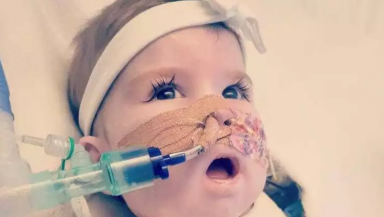
The European Court of Human Rights has refused to consider the case of 8-month-old Indi Gregory, whose doctors want to discontinue life-sustaining treatment.
A last ditch application to prohibit ending the treatment was submitted to the court on Thursday.
The application was made after the UK Court of Appeal earlier this week sided with doctors in deeming that it is in the baby girl's "best interests" to die.
Indi suffers from a rare mitochondrial disease. Her parents believe that life-sustaining treatment should continue because she is a happy baby who responds to their touch.
Her doctors at the Queen's Medical Centre in Nottingham believe the treatment should end.
In its response to the application, the ECHR declared it "inadmissible". The decision is final and cannot be appealed. This means that treatment can now be legally withdrawn.
Indi's father, Dean Gregory said: "As a father and parent, I was willing to do everything I could to save my daughter's life from inhumane decisions and people trying to play god.
"I'm heartbroken by the decision but I am no longer surprised. I believe it comes down to costs and resources and in the eyes of the NHS and the courts in this country and Europe, Indi is not worth it.
"To us she is everything and we will do everything we can to help until the end as it is our duty as parents to protect her."
Andrea Williams, chief executive of the Christian Legal Centre, which has supported the family, said: "Indi's family have given their all to contend for her life as has the Christian Legal Centre. It is disturbing and sad that they have had to go through such trauma. We stand with them."