Sometimes an item of news is so unsettling you have to read it or watch it through several times to make sure you have understood it correctly.
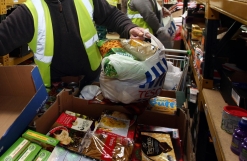
I felt that way when I heard the news that the Red Cross is to begin collecting food for families in Britain who are struggling to get enough to eat. It is the first time it has helped across the nation in this way since the Second World War.
When I looked into the story in more detail, I became even more concerned. The Trussell Trust, the biggest provider of food banks in the UK, says more than 350,000 people required its help last year – almost three times the number who received assistance in the previous 12 months.
A study by Church Action on Poverty and Oxfam puts the total figure getting food aid at about 500,000: yes, half a million people. That's roughly the equivalent of the whole population of Liverpool.
Sadly, the more you look into this news, the more disturbing it becomes. Hear, for example, this statement from the Inequality Briefing – a collective project supported by a range of organisations and individuals that aims to do exactly what it says on the tin. Their website states: "Inequality has been growing for the last 30 years. The gap between rich and poor is the widest since the second world war... If current trends continue, we will have reached Victorian levels of inequality in 20 years."

It continues: "Inequality has an impact on all aspects of life in Britain today. It means that some families are going hungry, children are left behind. Health and life expectancy of the poor are lower than that of the rich. Social mobility is at its lowest point in a generation and those born into poverty are likely to stay there."
These figures should concern Christians greatly. And – without being complacent – I am pleased to discover that they already do. For example, the Trussell Trust describes itself as "a Christian organisation motivated by Jesus' teaching on poverty and injustice. We operate according to Christian principles of compassion, honesty, integrity, openness, kindness and care of all people, regardless of backgrounds or beliefs." Amen to that!
Half way through writing this article I received in the post a letter from Christians Against Poverty (CAP). They are seeking to help an extra 7,650 families in 2014 in addition to those they already support. Amen to that too!
Moreover, Justin Welby has repeatedly highlighted the role of food banks as a way in which the church can fill in the gaps left by government services after the economic downturn. He has also stressed that the use of food banks is far from "invariably the result of fecklessness, laziness or just sheer idleness" as some might think.
The gospel is always socially transformative. Jesus demonstrated it when he reached out to the marginalised. The Apostle Paul knew it when he wrote to Philemon about his runaway slave Onesimus, as did James when he wrote about the wages owed to harvesters. William Wilberforce knew it in relation to the slave trade; William Booth in relation to humanitarian aid. The relatively new Street Pastors ministry knows it in relation to nightclub-goers. The question is – in the light of this news about food banks – do we? And how might we respond?
As Isaiah put it poetically: "If you spend yourselves on behalf of the hungry, and satisfy the needs of the oppressed, then your light will rise in the darkness, and your night will become like a noonday."