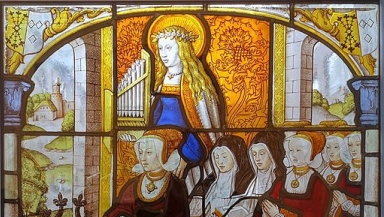
A new website, Cecilia's List, will be launched later this month to promote sacred music composed by women.
Created by a composition PhD student at the University of Aberdeen and former organist at St Andrew's Leytonstone in east London, the site – named after the patron saint of music and church musicians – will launch on St Cecilia's feast day on November 22, 2017 with a catalogue of works by a selection of women composers, organised seasonally.
Over time it will expand to include week-by-week recommendations matched to the lectionary and regular features such as interviews with composers and church musicians.
Kathryn Rose, who is launching the new site, said: 'Music by women is often sidelined in the English sacred choral tradition because of practical barriers to introducing new music and the administrative challenge of finding pieces suitable for particular occasions. It's possible to attend church weekly for months without hearing any work by women composers. Cecilia's List will mean that from November 22, people who want to include music by women in church services will find it easier to do so.'
She explained to Christian Today: 'I'm a musician by training and have always loved singing sacred music. I found myself in an organist's role in 2010 [until 2016] because the previous organist in my parish of St Andrew's Leytonstone was moving on and it was too good an opportunity to miss.
'One of the things that I noticed while I was directing music at St Andrew's was that there isn't very much music composed by women in the standard choral repertoire, especially hymns and pieces suitable for smaller parish choirs. There are some hymn words by women but almost no hymn tunes in most hymnals.
'I tried to redress the balance a bit by writing some of my own, because this was easier than finding suitable repertoire.
'Now that I no longer have set commitments in one parish, I've noticed that many churches have little or no music by women most Sundays. Even cathedrals are doing well if they have one piece a month, perhaps something by Judith Bingham, Sally Beamish or Judith Weir: beautiful music, but also beyond the scope of many parish choirs and congregations.'
She said this was 'not really surprising'. 'It's not that the people choosing the music don't want to be inclusive: it's that they're also considering the season, the lectionary readings, what approach the preacher might take to the texts, the type of service, the instrumentation and voices available, whether they need to use a separate sheet or can stick to the hymnal, how much other music the choir is learning that month, how much the sheet music costs and various other factors. They're often doing this on a tight schedule with constrained resources; looking for something different is often a luxury, not the default that it should be.'
Rose said: 'As I know a fair few women who compose, and I also know a number of clergy, organists and others involved in choosing music in churches, it seemed like a good idea to create a way for women composers to get their music to the people who want to use it, and for people who choose music to have an easier time finding what they need.'