According to the Royal College of Psychiatrists 'about half of our patients are turning to spirituality and religion to help them get through their mental health crisis'. And this is not some spurious product of desperation or wishful thinking, because there is a growing body of research into the mental health benefits of spirituality.
Take, for example, eating disorders. The Australian doctor and academic Daniel Akrawi has recently published, in the Journal of Eating Disorders, a systematic review of 22 research projects and concluded that 'strong and internalised religious beliefs coupled with having a secure and satisfying relationship with God were associated with lower levels of disordered eating, psychopathology and body image concern'.
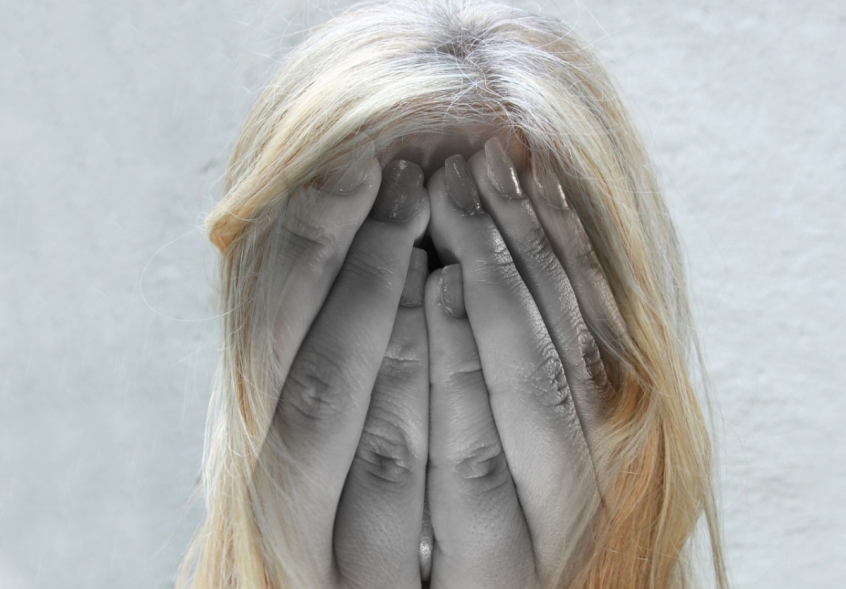
That certainly resonates with my own daughter, Dr Elizabeth McNaught, who nearly died from anorexia when she was 14 years old. In her recent book about her journey through this dreadful disease, she says:
'I began to see how my faith in God could change my perception of myself and the world around me. For too long I had been focused on food and weight, as if that was all that life was about, but now I began to gain insight into the fact that, in God's eyes, those issues were tiny compared to the opportunities to live for him and make a difference in the world. I began to see that if God loved me whatever I was like, then what would it matter whether other people liked me or not. Gradually, I even began to learn how I might be able to love myself again. I began to change my focus from the weight I could lose in my body to the good I could do in the world. I began to regain a positive vision for my life.'
The same principles apply to all mental health issues, because there is a clear link between spirituality and good mental health. The philosopher Peter S Williams has developed a very helpful description of spirituality as the combination of people's thoughts, feelings and actions. This builds upon the work of medieval scholars who referred to orthodoxy (right thinking), orthopathy (right feeling) and orthopraxy (right actions). It is surely no coincidence that this maps directly onto the structure of NHS-recommended Cognitive Behavioural Therapy, which addresses the cycle of people's thoughts, feelings and actions.

This provides the church with an opportunity and a challenge. According to the mental health charity Mind, approximately one in four people in the UK will experience a mental health problem each year. If we combine this with the data from the Royal College of Psychiatrists, that half of such people are looking for spiritual and religious help with their crisis, then this is about 7.5m people. Given the current levels of church attendance, most of these are probably not within our congregations. Rather, they are people in the community around us who we are called to reach and help.
So, I am delighted to be part of a new coalition of organisations who are working together on a new project called A Spiritual Path to Mental Health (aSpiritualPath.org) which is developing resources to help these 7.5m people.
'Life Hurts: A doctor's personal journey through anorexia', by Dr Elizabeth McNaught, is published by Malcolm Down Publishing, price £9.99.