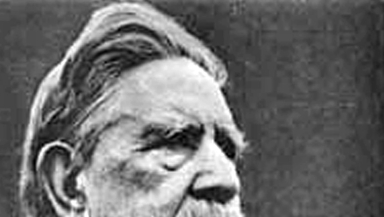
A 19<sup>th century Welsh missionary is being celebrated in his home town of Swansea in the city's museum – not for preaching the gospel 150 years ago, but for starting a ministry in China that has saved countless lives and continues today.
Griffith John set sail for China in 1855 and founded a hospital in Wuhan that is now one of the largest in the country. It has 5,000 beds and treats three and a half million people a year, and collaborates with Swansea University's medical school.
The link isn't only medical but civic, with a delegation from Swansea visiting Wuhan last year where they were presented with items given to John by the people of Wuhan including books and musical instruments that form the core of the museum's exhibition. But who was Griffith John and what did he achieve?
1. Born in 1831 in Swansea, he was a Congregationalist who delivered his first sermon at the age of 14. He went to China with the London Missionary Society with his first wife Margaret in 1855.
2. He travelled extensively throughout the country at a time when it was very little known by Europeans, learning the language fluently and becoming a powerful speaker.
3. A man of enormous energy, John founded mission stations, hospitals, clinics and colleges as well as writing copiously. He translated the New Testament twice, once into literary Chinese and once into Mandarin.
4. His first wife died on the way back from England to China after a furlough in 1873. He then married the widow of another missionary, Mrs Jenkins, who died in 1885.
5. Britain fought two shameful 'Opium Wars' with China in the mid-19<sup>th century to compel China to allow the importation of opium from its Indian colony. Griffith John was a fierce critic of the trade and campaigned against it.
6. He lived through the terrible Boxer Rebellion from 1899-1901, which saw thousands of Western missionaries and Chinese converts murdered. Many of the mission stations and churches he founded were destroyed.
7. He believed Christ was the "one Saviour" but also believed it was right to "acknowledge what was true and noble" in other religions rather than being relentlessly confrontational.
8. He returned to Swansea in 1912, worn out by his work and by a series of strokes, and died the same year. He is buried there and his memory is kept alive by admirers of his work.