As exclamations go, 'good grief' is pretty innocuous. There is not much in those two words that can offend in the way some other expressions of astonishment can. But over the last few months I've begun to wonder whether there is such a thing as good grief.
On January 3, my wife Jill collapsed unexpectedly at home. Two days later, she was dead. In the intervening 48 hours, she had remained unconscious in Wolverhampton's New Cross Hospital. She had suffered a massive subarachnoid haemorrhage – a type of stroke.
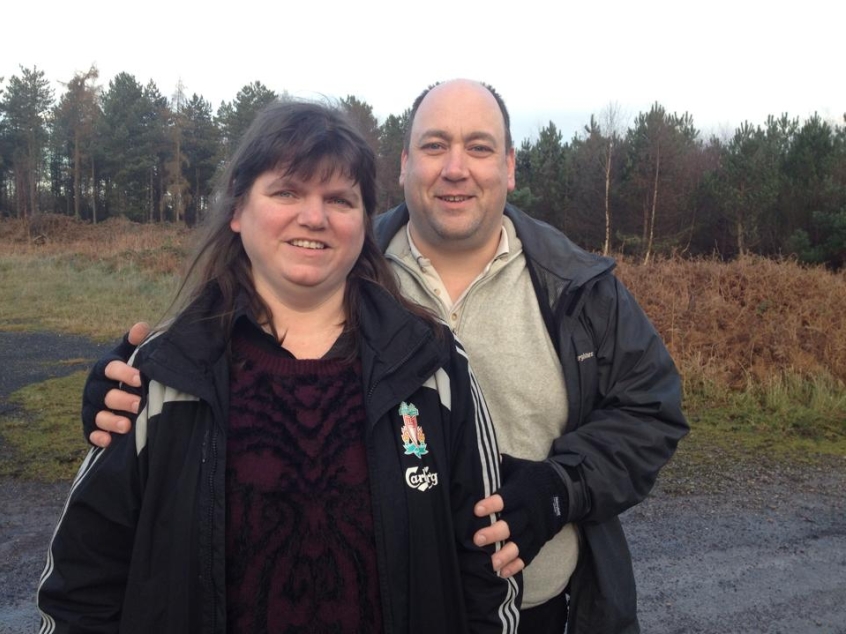
At the time I was quite calm and collected, although not exactly logical in my thinking: I had declined the invitation by the paramedic to travel in the ambulance with Jilly – I needed to take the car so I could bring her home. But I drove to the hospital slowly. I had seen that she wasn't breathing without assistance and I didn't want to hear what I knew in my heart of hearts the doctors would tell me.
Close family were summoned, a priest-friend celebrated a bedside communion service, prayers were said, and then it was over.
I still don't know what I was thinking at that stage. It was as if I was in a dream. I pledged not to have a drink. I knew that it would be all too easy to get drunk and I knew that if I did get drunk, I would most likely stay in that state. But I didn't want to eat either. It was only the 'meals on wheels' that a couple of local churches had organised that kept me and my three lads nourished in that first fortnight.
But a constant stream of visitors, thousands – literally – of lovely messages from friends and strangers, the news coverage of Jill's life and death, and the planning of her funeral kept me going.
But what then? A funeral is an opportunity to say goodbye to a person you love. For some, it is also a good time to say goodbye to their husband, their sons, their siblings. Initially, this was a welcome respite – the initial phase of support was quite overwhelming (though very welcome). Now, understandably, the pace of visitors had slowed and the rate of messages slowed right down.
Now, I was on my own. My eldest son, Myles, returned to work in Hong Kong. My middle son, Rory, returned to university in Sunderland, leaving Fergus, my youngest son, and me alone in a very large house. Jilly and I had talked about moving out this year once Fergus left for university, but we had not decided where we would move to.
Now I don't want to move. Moving means making plans. And I can't make any plans for the future because such plans, inevitably, do not involve Jilly. I still can't bring myself to plan for a life without her. That is not to say that I don't realise that Jilly is no longer in my life; but accepting that, and planning for it, are two very different things.
My sister-in-law and her daughter have moved in to the house. This is a very welcome development, not least because looking after my niece when my sister-in-law is away visiting her partner gives me a purpose in life. This is one of the hardest things for people to understand.
I try to explain to those around me that, often, I just can't see a reason to be. All my hopes, dreams, ambitions and plans are in shreds. And without Jilly, I can't bring myself to make new ones.
This is often misheard by those who care about me. Not seeing a reason to live is not the same as seeing reasons not to live. But if I am late back from anywhere and I have not replied to messages or answered the phone, I will arrive back home to find umpteen missed calls and dozens of messages: 'Where are you?' 'Is everything okay?' 'What's wrong?'
But the fact is that sometimes, I need to just disappear. I need space to try and organise my jumble of thoughts. At times, this means that I will spend whole days in bed. Other times I will drive out to a local beauty spot and sit and think. Not that it helps.
Constant tiredness, caused by an inability to sleep, disrupt normal thought patterns. And so it becomes normal to be crushed by self-anger at how calm I was while Jilly was in hospital. Fortunately, that particular train of thought lasted only a couple of weeks.
There are times when Jilly's death, just under five months ago, feels like it happened five minutes ago; and at other times it feels like years ago. However long ago it happened, the grief is here and now. And there is nothing good about it.