God doesn't exist after all. It turns out we've all just been imagining him.
That, at least, is the conclusion some have been drawing from recently-publicised research by neuroscientist Andrew Newberg from the Jefferson Myrna Brind Centre of Integrative Medicine in Philadelphia.
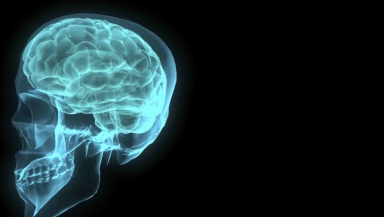
According to the Daily Telegraph: "During brain scans of those involved in various types of meditation and prayer, Newberg noticed increased activity in the limbic system, which regulates emotion. He also noted decreased activity in the parietal lobe, the part of the brain responsible for orienting oneself in space and time."
The conclusion, according to writer and atheist, Julia Llewellyn Smith? If Newberg and his colleagues are right, then many people's religious experiences are "not proof of being touched by a supreme being, but mere blips in brain chemistry".
Of course, there's another way of looking at it. The fact that religious experiences can produce measurable brain responses is by no means an indication that God is "all in the mind". After all, my brain reacts to the thought of cheese and chocolate – both of which are very real! As Graham Ward, Regius Professor of Divinity at Oxford University, says: "The temporal lobes light up for any kind of excitement, not just religious experience."
It's an interesting example of how people's conclusions are shaped by the presuppositions with which they start. And it's remarkable, if not altogether surprising, how often scientists and atheists fall into the trap of dismissing Christian belief because they profoundly misunderstand it – or have never really given it proper consideration.
One article I read recently suggested that God could not possibly exist because men and women have such an insignificant place in the vastness of space that the universe could not have been designed for them. The presupposition there was that Christians believe God's aim was to make some kind of explicitly human-centred cosmos.
But in fact, as Psalm 19 lyrically explains, the heavens are there not to glorify humanity but "to declare the glory of God" – in other words, to function as a giant billboard, as it were, for his majesty and splendour.
Then there was the comment of Stephen Hawking a few years ago that science now left no role for God in the creation of the universe. Underlying this was the assumption that Christians just invoke God to explain things that can't otherwise be accounted for.
But Christian doctrine does not point to a God whose existence can only be inferred from anything otherwise inexplicable – a "god of the gaps" who is rendered unnecessary as knowledge increases. On the contrary, classical Christian orthodoxy describes a God intimately involved with every aspect of the universe, and one who works mostly (if not always) through the regular laws of physics.
Finally, when it comes to false presuppositions, there was a recent article in New Scientist magazine by particle physicist Victor Stenger highlighting the failure of some experiments to prove intercessory prayer had any impact on the sick. Here we have a triple misunderstanding – that prayer is some kind of "penny in the slot" machine, that God is willing to act as a laboratory rat, and that healing is his top priority.
In fact, when people approached Jesus for that kind of proof-on-a-plate he sometimes gave them pretty short shrift (Matthew 12:39) – pointing them to the resurrection. But, as he himself said, not even that will convince everyone (Luke 16:31).
Ultimately, people have to start with Jesus for the rest of the Christian worldview to make sense. Once we are clear on who he is, then all the other pieces – scientific, philosophical, theological – gradually fall into place.
David Baker is a Church of England minister and journalist.