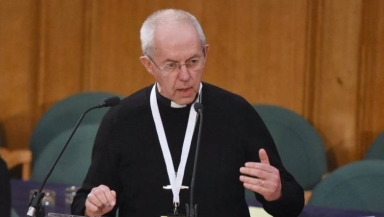
Change is afoot in the Anglican Communion after the Global South Fellowship of Anglicans today published a seven-point plan, overturning the traditional Instruments of Communion and ousting the Archbishop of Canterbury, Justin Welby, from any position of global leadership.
The leaders of the GSFA have called Provinces to acknowledge that the Church of England has "departed from the historic faith passed down from the Apostles," "broken communion with those province that remain faithful" and "disqualified herself from leading the Communion."
If this is accepted, it follows that they will no longer recognise the present Archbishop of Canterbury as 'first among equals'. And so, the first Instrument of Communion topples.
In, "forfeiting [his] leadership role of the global Communion," the Archbishop of Canterbury no longer has the authority to call either the Primates Meetings or a future Lambeth Conference.
Instead, they intend to collaborate with other faithful Anglicans to "work out the shape and nature of [their] common life together." Bang go the next two Instruments of Communion.
That leaves the Anglican Consultative Council (ACC) as the last Instrument standing – but this is also dismissed, with the leadership of the GSFA stating firmly that they can no longer "walk together" in the way that last week's ACC-18 meeting in Ghana proposed.
The GSFA are not interested in another decade-long talking-shop with revisionist provinces.
Having removed the Instruments of Communion from power they recognise "the responsibility falls to the remaining orthodox Primates," to take the lead.
They "will not walk away from the Communion," but in the Cairo Covenant they believe they can offer a new way of relating to one another.
This is no knee-jerk reaction - the Cairo Covenant is extraordinarily detailed and was agreed by the GSFA in 2019. It is likely to be the topic of much conversation when orthodox Anglicans meet together for GAFCON IV in Kigali this April. This coup has been years in the making and might just succeed.
For an English audience, however, the most interesting part of the statement is bound to be their promise to provide, "Primatial and episcopal oversight to orthodox dioceses and networks of Anglican churches" in revisionist provinces.
Are we going to see the break-up of the Church of England in the same way that happened when similar offers were made to orthodox Anglicans in the USA and Canada twenty years ago?
Will any diocesan bishop seek the oversight of a foreign jurisdiction? Will, English clergy be willing to come under the oversight of bishops who expect to be respected leaders rather than distant managers?
As Archbishop Samy Shehata challenged those at General Synod, "It's your choice."
Editor's note: The Archbishop of Canterbury's office, Lambeth Palace, was asked for a response to the GSFA's statement. The response from Lambeth Palace is published here in full:
"At last week's meeting of the Anglican Consultative Council (ACC) in Ghana, there was widespread support for working together patiently and constructively to review the Instruments of Communion, so that our differences and disagreements can be held together in unity and fellowship. The Archbishop is in regular contact with his fellow Primates and looks forward to discussing this and other matters with them over the coming period.
"The Archbishop of Canterbury commented last week at the ACC in Ghana that these structures are always able to change with the times.
"We note the statement issued today by some Anglican Primates and we fully appreciate their position. As was reaffirmed in multiple discussions at the ACC in Ghana however, no changes to the formal structures of the Anglican Communion can be made unless they are agreed upon by the Instruments of Communion.
"The deep disagreements that exist across the Anglican Communion on sexuality and marriage are not new. The 42 member Churches of the Anglican Communion are independent and autonomous, but at the same time interdependent. It is a fundamental principle of the Anglican Communion that no province can bind another province, and no Instrument of Communion has any jurisdictional authority over any province.
"In a world of conflict, suffering and uncertainty, we must remember that more unites us than divides us. Despite our differences, we must find ways to continue walking and working together as followers of Jesus Christ to serve those in need. It was clear at this week's global Anglican gathering in Accra that many Anglicans share this view. It remains the Archbishop's prayer and his call to Anglicans around the Communion."