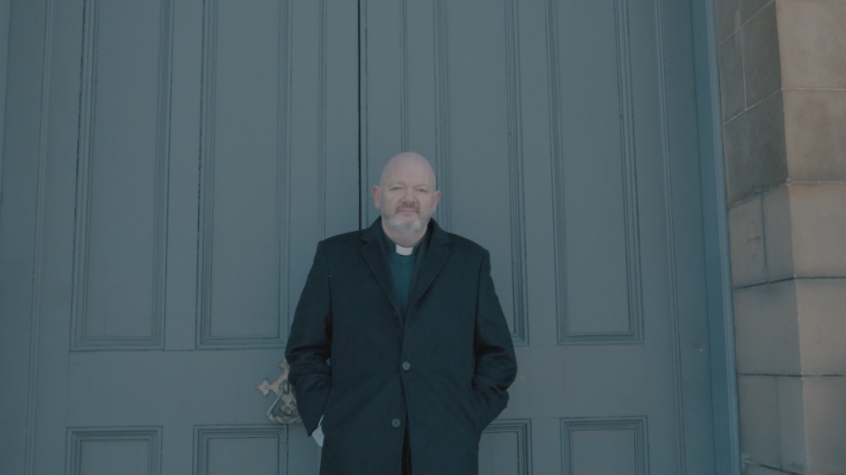
A Glasgow priest has sent a pre-action letter to the Scottish Government demanding that churches be allowed to re-open for public worship.
Scottish ministers have seven days to respond to the letter challenging the ban on worship in church during the current lockdown.
Scotland differs from England and Wales in imposing criminal penalties on services in church. South of the border, churches have been allowed to remain open for worship during the lockdown.
The pre-action letter has been sent by Canon Tom White, of St Alphonsus Church, situated in one of the most deprived areas of the UK, where 2006 data puts the average life expectancy below Iraq and North Korea.
Canon Tom, who has crowdfunded his legal challenge, believes churches should be considered an essential service during a time of societal crisis.
"As a priest, I have witnessed first-hand the grief and suffering that Covid-19 has caused for my parish members," he said.
"Therefore I know, as a priest, that we need to open my church to be able to support them best in their hour of need."
He continued: "I speak for many in the church when I say that it's very important to keep people safe and well during this pandemic. But, this can and should be done while also allowing people to fulfil their need to draw close to God and worship in community at the church.
"With appropriate safety measures, we can accommodate both of these outcomes, as is shown in England, Northern Ireland and Wales."
The case is being supported by ADF International, a legal advocacy organisation that defends religious freedom worldwide.
Ryan Christopher, director of ADF International in the UK, said: "Freedom of religion is a foundational human right.
"We support Canon Tom's efforts because domestic and international law require the government to protect freedom of worship, including in public or in private, individually or in community with others.
"This right should be limited only to the extent that is necessary and proportionate. The Scottish Government's medical advisors have conceded there is no robust medical evidence for the closure of churches, which remain open in most European countries.
"We must find solutions which protect both the vulnerable and those who understand their communal worship to be as essential as food and water."
Scotland's stance differs not only from other parts of the UK, but also Europe, with similar bans being overturned in Geneva, France and Germany.
Lois McLatchie, communications officer for ADF International, said: "Why should Scots be denied the freedom afforded to our English neighbours? Authorities in England, Wales and Northern Ireland – and indeed, most of the rest of the world – have found a way to protect the public while also respecting the rights of religious communities.
"It is unclear why the Scottish government cannot do the same. Churches have much to offer during this difficult time.
"The government should not disadvantage the people of Scotland by failing to account for the moral and legal case for public worship."