The Archbishop of Canterbury has rejected calls for a second referendum on the UK's membership of the European Union and insisted the result must be accepted.
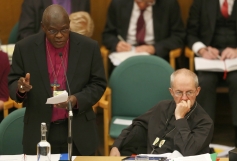
Justin Welby said the "high turnout" and "clarity of the result" meant that whatever the view, "we must now deal with the world as it is". Speaking in a debate on the referendum at the Church's governing synod on Friday, he said that to do otherwise would be "unhelpful".
Welby's comments came as several Anglicans called on the Church to not recognise the result of the referendum. Rev Paul Hutchinson asked the synod be "mindful of" the result rather than "recognising" it. "The word [to recognise] brings overtones of acceptance, legitimisation or acceptance," he said. "We need...a more neutral replacement."
The challenge was to a motion by the Archbishop of Canterbury that asked the Church to recognise the result of the referendum and "unite in the common task of building a general and forward looking country".
Although Hutchinson's opposition was rejected, it reflects a wider attitude within the Church of England elite that is largely opposed to Brexit.
Only one Anglican bishop has confessed to voting to leave the EU with a number vociferously arguing to Remain. Both the Archbishops publicly declared their support for remain ahead of the vote.
The Bishop of Guildford, Andrew Watson, said before the referendum that Brexit, along with a Donald Trump presidency, would be a "nightmare" situation.
Bishop Robert Innes, the Church of England's Bishop in Europe, said: "From my perspective, the European referendum and the result represent a sad loss national vocation, an abject failure of political leadership and the squandering of the birthright of our young people."
He added the UK was "intent on building fences. My job as a bishop is to build bridges."
But Welby insisted: "We do not in any sense reject or hate the majority [of people who voted to leave]. We must not in any way demean those who voted to leave."
More than four million people have signed a petition for a second referendum and the issue may be debated in Parliament.
Welby's comments come after he spoke in the House of Lords two-day debate on the referendum. He criticised the "poison and hatred" that emerged as a result of the debate. He urged political leaders to tackle the "xenophobia and racism" seen since the UK's vote to leave the European Union.