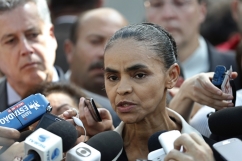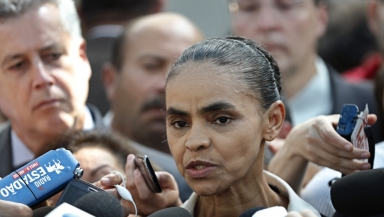
Another twist in the rollercoaster ride of the Brazilian presidential election leaves evangelical Christian Marina Silva out of the race.
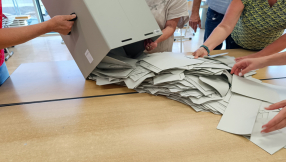
Current President Dilma Rousseff gained 42 pe rcent of the vote in the first round of the election yesterday.
In a surprising turn, the Social Democrat candidate Aécio Neves moved from third position in the polls to come second with 34 per cent of the vote.
But Socialist Party candidate Silva is out of the running, having gained only 21 per cent of the vote.
As President Rousseff did not achieve a majority, she and Neves will fight for the presidency in the second round on October 26.
Silva, 56, only entered the race six weeks ago when the party's original candidate, Eduardo Campos, died in a plane crash.
She was an unusual candidate in more than one respect. Silva grew up in the Amazon rainforest, one of 11 children born to rubber tappers. She only learned to read at the age of 16, but by 36 had become the youngest member of the Brazilian Senate.
Initially the former environmental minister shot ahead in the polls, attracting much speculation that she could beat Rousseff.
More recent polls placed her in second position, and it looked likely that she could perform better if she made it through to the second round.
In the weeks leading up to the election, the President's Workers' Party adopted a negative campaign strategy against Silva, issuing television adverts that portrayed her as a threat to the poor.
Responding to the vote she compared the forces against her minority party candidacy to David and Goliath, adding that she did not regret choosing to retaliate against her opponent. "I will never regret the decision we made not to do just anything to win the election at any cost," she said, according to the Financial Times.
Neves, 54, who represents a dominant centrist party, comes from a prominent political family. In 1985 his grandfather became Brazil's first democratically elected president after the end of the military dictatorship, although he died before assuming office.