I must admit I was forewarned. I spent time chatting to a psychiatrist friend last week and he told me that he and his colleagues are conscious of the devastating impact the current pandemic is likely to have on the nation's mental health. And sure enough, within a day or so of our chat, health service adviser Prof Neil Greenberg issued a warning that NHS staff are at risk of high rates of post-traumatic stress disorder if they don't get the right support as the outbreak subsides.
In the same way Dr Michael Bloomfield, a psychiatrist at University College London (UCL) and an NHS traumatic stress clinic, believes there will be an urgent need to work out how staff calling new NHS mental health hotlines can be referred on to specialist services. He knows what he is talking about too, because the clinic was set up following the fire at King's Cross Station in 1987 and specialises in helping people following such harrowing events as a terrorist attack.
The Archbishop of Canterbury has also joined the debate by encouraging the government to continue investing in mental health services because "spending money on mental health will have a positive rate of return".
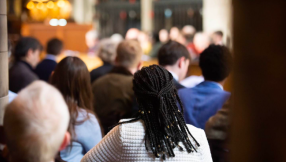
Given this rising tide of concern, I would suggest that it is worth reflecting on this report on a study into the wellbeing of healthcare workers in the United States, which found that those who regularly attend worship services are at a lower risk of deaths related to alcohol, drugs, or suicide, collectively known as "deaths from despair."
In fact, several studies in recent years have shown that attending worship services can have a positive effect on our health. In 2018, for example, researchers at the University of Texas found that people who go to church and pray regularly sleep better than their less religious friends.
Now, I would be the first to admit the church is a flawed institution and that it functions far less effectively than its founder would want it to. But in spite of this, God continues to use the church, and those who belong to it often find themselves being blessed in ways that go far beyond anything they ever expected.
I think of the man who came to one of our worship services one night for example. He had just been told he was terminally ill, and it would be no exaggeration to say he was terrified. But he had such an experience of God's presence that evening that he never felt afraid again. In the same way, I vividly recall a young mum who came for help. She was pregnant and racked with guilt because she had had an abortion when she was much younger. As we prayed together she discovered the true meaning of forgiveness. It was an experience that changed her life. I could share many more stories like this.
For all its faults, then, the church offers us an opportunity to experience the presence of the transcendent, powerful, life-changing God. It invites us to enjoy the support and encouragement of a like-minded group of people as we face the challenges of life. Above all, it provides the context within which we can be constantly reminded that we all matter, that life does have a purpose and death need not be the end. Put simply, it can help us to live in hope and not in fear or despair.
Nothing illustrates this better than the extraordinary story of Jeremiah Neitz. I learned of it when the Pastor of Wedgwood Baptist Church Fort Worth gave me a copy of 'Night of Tragedy Dawning of Light'. Written by Dan R Crawford with Kevin Galey and Chip Gillette, it is a record of that awful night in September 1999 when a lone gunman entered his church and shot dozens of rounds of ammunition, killing seven young people in the process.
Neitz confronted the gunman and said "Sir you can shoot me if you want. But I know where I'm going. I'm going to heaven. What about you?". Faced with such a disarming statement Larry Gene Ashbrook turned away from nineteen-year old Neitz and shot himself instead. Despair and hope, life and death encapsulated in a brief moment of time, and an unforgettable reminder of why Jesus is such good news.
Rob James is a Baptist minister, writer and church and media consultant to the Evangelical Alliance Wales. He is the author of Little Thoughts About a Big God.