David Cameron: 'Clearly ludicrous' to ban Christian Unions under extremism laws

The Prime Minister has said it is "clearly ludicrous" for a college Christian Union (CU) to be banned on the grounds of the government's counter-extremism strategy.
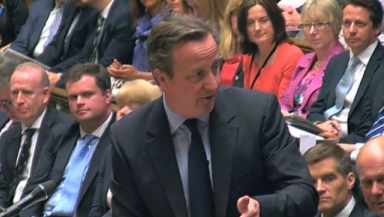
The Prime Minister added he was sorry he could not make a national parliamentary prayer breakfast next week. parliamentlive.tv

David Cameron was asked in Prime Minister's Questions today about a case where a CU was banned purportedly on the basis of the government's anti-terrorism legislation. The college in question has not been identified but it is believed to be the first case of a Christian group being targeted under the Prevent strategy, which was introduced last autumn to tackle extremism in universities and schools.

In response to a question by the Christian MP Fiona Bruce, Cameron told the House of Commons he had not heard of the particular case but it was "clearly ludicrous" to ban a CU as a result of Prevent.

"People need to exercise some common sense in making these judgements because it is quite clear that is not what it [Prevent] was intended for," he said.

The case in question was first reported in the Sunday Times which said the college had barred the CU from holding prayer and Bible study meetings on site as a result of Prevent.
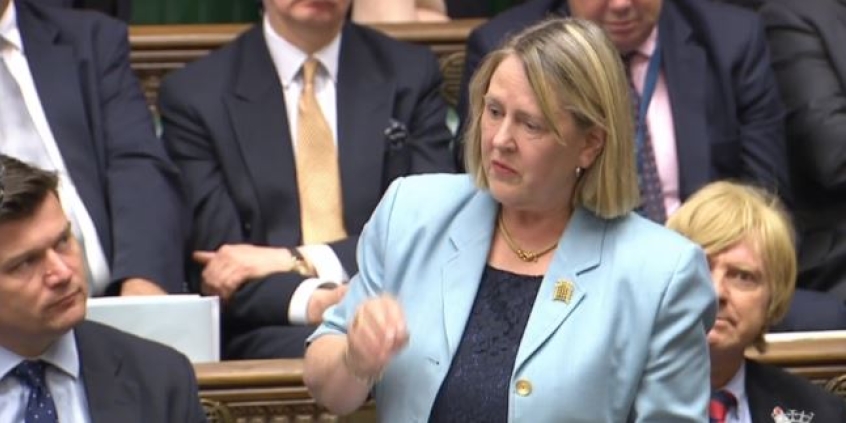
Fiona Bruce, MP for Congleton, asked the question about the banned Christian Union: "Would the Prime Minister agree such actions was never the purpose of a strategy intended to address terrorism and extremism?" parliamentlive.tv

Toni Coulton, director of Festive, a charity that supports Christians in the UK's further education and sixth-form colleges, told the Sunday Times: "Senior management were not happy to have Christians meeting for prayer and fellowship and the reason they gave was because of the Prevent initiative."

Speaking to Christian Today, Coulton said she'd heard of other colleges shutting down CUs. She cited a number of factors, including publicity about the dangers of radicalisation and worries about what Ofsted might say if it inspects on-campus religious bodies.

Prevent is a part of the government's anti-extremism strategy and places a duty on schools and colleges to report suspected incidents of radicalisation.

In 2014 the government made clear the programme was designed to tackle all aspects of the terrorist threat. It requires teachers "to take action when they observe behaviour of concern". However, although a consultation document on the strategy mentioned Islamist extremism and the extreme right, no mention was made of Christianity.


related articles
New counter-extremism law will fuel terrorism, civic leaders warn

New counter-extremism law will fuel terrorism, civic leaders warn

Prime Minister on collision course with experts over plans to fight extremism

Prime Minister on collision course with experts over plans to fight extremism

When secularism becomes sacred: The attack on free speech and why it\'s dangerous for Christians
When secularism becomes sacred: The attack on free speech and why it's dangerous for Christians

When secularism becomes sacred: The attack on free speech and why it's dangerous for Christians

Why banning hijabs at work sets a dangerous precedent for religious liberty

Why banning hijabs at work sets a dangerous precedent for religious liberty

Is the government's anti-extremism strategy targeting college Christian Unions?

Is the government's anti-extremism strategy targeting college Christian Unions?

News
New ‘Tyndale Trail’ launched to mark 500 years of English New Testament

A new long-distance walking route tracing the life of Bible translator William Tyndale has been launched in south-west England, as part of commemorations marking 500 years since his groundbreaking English New Testament.

Russia and Ukraine agree to temporary Orthodox Easter truce

In the Orthodox calendar, Easter falls one week after the date celebrated in western Europe.

Bishop urges people of Britain to stand up for Christian truth

It follows an earlier open letter addressed to King Charles, calling upon him to defend Christianity in line with his titles of Supreme Governor of the Church of England and "Defender of the Faith".

Fundraising Regulator reminds churches that collections are subject to code of practice

Churches can breach the code even when acting in good faith.