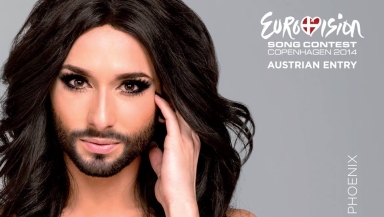
A spokesperson for the Russian Orthodox Church has condemned the Eurovision song contest for allowing drag queen Conchita Wurst as its winner, branding the choice as an "abomination".
Real name Tom Neuwirth, the Austrian singer performs under the guise of Conchita as a "call for tolerance for everything that seems different".
Preferring the female pronoun, she impressed audiences on Sunday with a rendition of "Rise like a phoenix", propelling her to victory with 290 points, Austria's first Eurovision win since 1966.
Conchita's performance quickly gained widespread acclaim online as viewers took to social media to praise her vocal range and bravery.
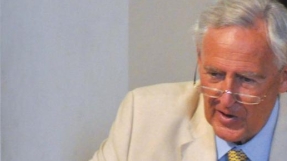
However, her performance has not been received well received everywhere. In an interview with the Interfax news agency, Vladimir Legoyda of the Russian Orthodox Church, declared that Conchita's win indicates "yet one more step in the rejection of the Christian identity of European culture".
"The process of the legalisation of that to which the Bible refers to as nothing less than an abomination is already long not news in the contemporary world," he said.
"Unfortunately, the legal and cultural spheres are moving in a parallel direction, to which the results of this competition bear witness."
Russian attitudes towards homosexuality have been at the forefront of recent discussion, with many calling for a boycott of the 2014 Winter Olympic Games which took place in Sochi earlier this year. Russia's anti-gay laws, which make it illegal to advocate for gay rights, have drawn widespread criticism from human rights organisations and the Orthodox Church has also been vocal in criticising same-sex marriage.
The legalisation of gay marriage signifies "a serious step towards the destruction of the very concept of marriage and the family", warned the chairman of the department of external church relations, Metropolitan Hilarion of Volokolamsk, in November.
In an address before the 10<sup>th Assembly of the World Council of Churches in Busan, Korea he also declared that, "From the point of view of biblical teaching and traditional Christian moral values, this testifies to a profound spiritual crisis.
"The religious understanding of sin has been conclusively eroded in societies that until recently thought of themselves as Christian."
In response to the condemnation of Conchita, British theologian and LGBT advocate Vicky Beeching tweeted, "Sad".
Watch Conchita's winning performance below: