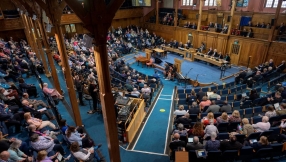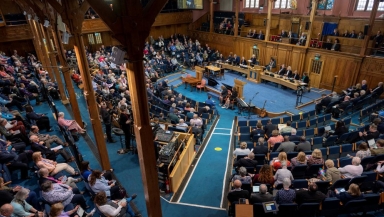
The Church of Scotland’s General Assembly will next month consider a report detailing historic links to the transatlantic slave trade and proposals for an official institutional apology.
The report details ways in which the Church of Scotland believes it profited from the involvement of some of its members in the slave trade. Furthermore, evidence that the Church of Scotland justified slavery on theological grounds will also be presented.
The report urges the Church to make a formal apology and to explore a range of options that would promote repentance, justice and reconciliation.
The apology contains a number of confessions, including that "theological justification was offered for race-based slavery" and that it was "defended on moral grounds".
It states that even after slavery was outlawed in Scotland, some members and office-holders of the Church of Scotland "continued to own slaves overseas" or lobbied against emancipation, and that "for years many of our office-holders and other members derived their income directly or indirectly from slave labour".
The General Assembly will consider the report at a meeting on 16 May.
The report says at one point that slavery was based on “the invention of race” and that while some may question why the Church is apologising now after centuries have passed, "the passage of time does not diminish moral responsibility, nor does it render suffering irrelevant where its consequences endure."
Another paragraph reads, “It is neither just nor appropriate for those most harmed – particularly members of African descent within the Church and wider community – to bear the primary burden of explaining its significance to a largely White membership. Responsibility for understanding, naming, and responding to this legacy rests with the institution and, in practice, with its White majority.”
The proposed apology states that the Church is sorry for how it “collectively and individually, contributed to and benefitted from the enslavement of people of African descent”.
It continues, “We are grieved beyond telling by the extraordinary suffering we have inflicted – through our actions and our inaction – on our brothers and sisters. As bearers of God's image loved by God, they should have been loved by us. Not only did we fail to love them, we failed to treat them with basic human respect.
“We repent, committing ourselves to changing course and bearing fruit worthy of repentance.”
Similar moves have been taken by the Church of England, which has committed to providing £100 million in funding towards reparations, after its own investigations concluded that the Church had benefited from slavery. “Project Spire”, as the scheme is called, has proved controversial however, with some historians questioning whether the evidence suggesting complicity with slavery is as strong as claimed.