Minority Christian communities in the Holy Land are vulnerable to regional strife and at increasing risk of verbal and physical attacks, according to a new study from Birmingham University.
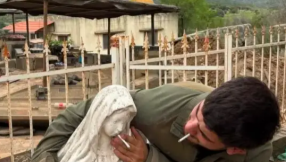
Christians in the region reported "mistreatment on religious grounds and feel threatened by abusive behaviour" due to "increasing grievance among Palestinian Muslims".
This has "increased the risk of verbal and physical attacks against minority Palestinian Christian communities".
Major concerns among the Christian minority, especially in Israel, include "an unfair visa system and lack of benefits" which "may undermine recruitment and retention of clergy that the churches need to continue building the communities and life of the Holy Land".
The increasing vulnerability of the Christian community in Israel, Jordan and Palestine is in spite of their "wide-ranging contribution to building civil society", with new start-ups and "excellence" in education, health and other humanitarian sectors, the researchers said.
Their concerns were outlined in the report, 'Defeating Minority Exclusion and Unlocking Potential: Christianity in the Holy Land'.
Researchers from Birmingham University drew up the report in conjunction with the International Community of the Holy Sepulchre (ICoHS), a UK-based Christian organisation which sets out "to reverse the decline in the population of Christians living in the Holy Land".
The report recommends "a new programme of education, briefing and information in the Holy Land, UK, US, and Australia to increase understanding and engagement with the Christian communities' contribution".
It also says the Israeli government should regularly publish departmental performance data relating to Christian communities.
Commenting on the findings, Professor Francis Davis from Birmingham University's Edward Cadbury Centre, said: "Christianity in the Holy Land is globally and diplomatically significant because of its position at the heart of the region, but its economic, social and civic value for the people of the Holy Land have been massively underestimated.
"This contribution is disproportionate to the size of Christian communities, yet they are at grave risk – from war, inter-religious and ethnic conflict, constraints on international investment, and fears of economic and legal constraint provoked by migration."
He added: "Their future is more vulnerable than it needs to be."