Almost half of non-religious American adults consider Christianity to be extremist, according to a new study by the Barna Group.
The new study examined society's current perceptions of faith and Christianity. Forty-five percent of atheists, agnostics, and religiously unaffiliated in America agree with the statement that "Christianity is extremist".
Only 14 per cent of this group strongly disagreed that Christianity is extremist, with 41 per cent only disagreeing 'somewhat'.
The study acknowledges the current political climate as an influencing factor in an increased concern about religious extremism. Three quarters of all Americans – and nine out of 10 American adults with no faith affiliation – agree that "being religiously extreme is a threat to society".
The study also examined what people considered extremist, which ranged from religiously justified violence, to just reading the Bible. More than 40 per cent of those asked considered protesting government policies that conflict with religious views extreme and at least a fifth considered speaking in tongues an extremist activity.
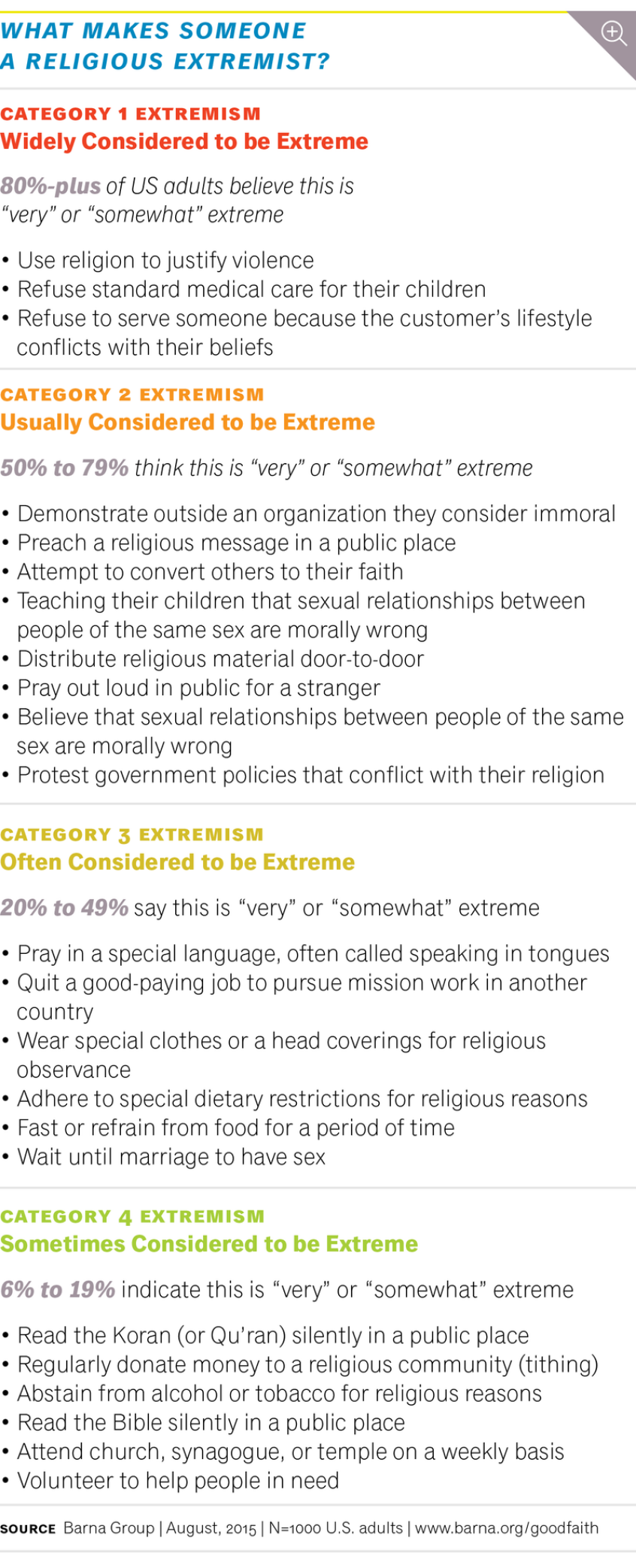
Evangelical Christians were found to be far less likely to perceive the elements assessed in the research to constitute extremism. They were just as likely to consider religious based violence extremist, but there were areas where the evangelical position and that of the "sceptic" (those who self-identify as atheist, agnostic and religiously unaffiliated) diverged hugely.
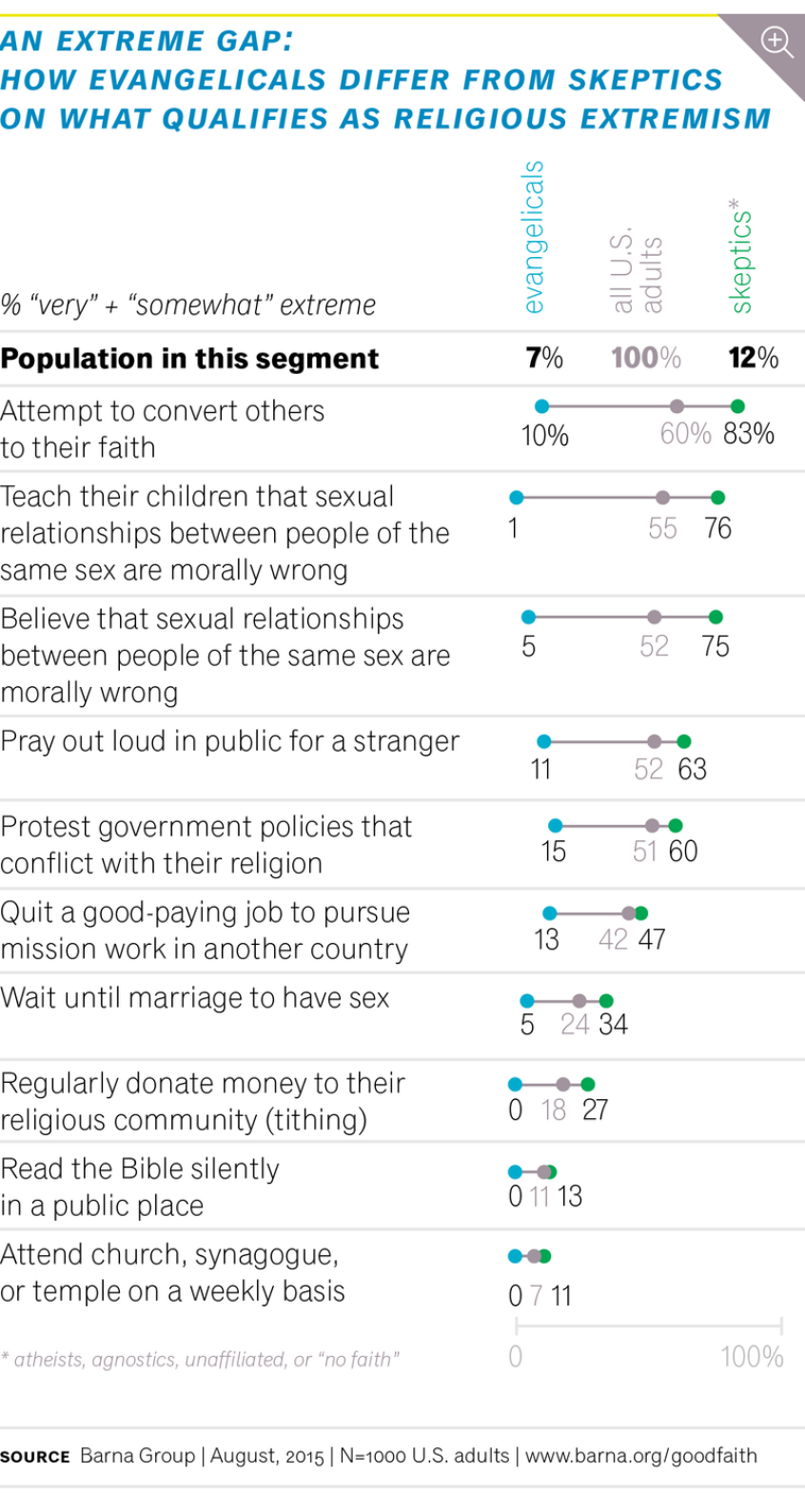
Attempting to convert others to Chrsitianity is considered extreme by just 10 per cent by evangelicals, while 83 per cent of "sceptics" consider it to be so.
Just one per cent of evangelicals believe teaching their children that same-sex relationships are morally wrong is religiously extreme, compared to three-quarters of "sceptics".
"The research starkly demonstrates the ways in which evangelicals and many practising Catholics are out of the cultural mainstream," said David Kinnaman, president of Barna and director of this research.
"This fact explains why millions of devout Christians are experiencing such frustration and concern," he added. "They are feeling out of step with social norms and the cultural momentum. This is most significantly felt when it comes to social views, such as evangelicals' convictions on same-sex relationships."