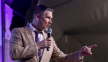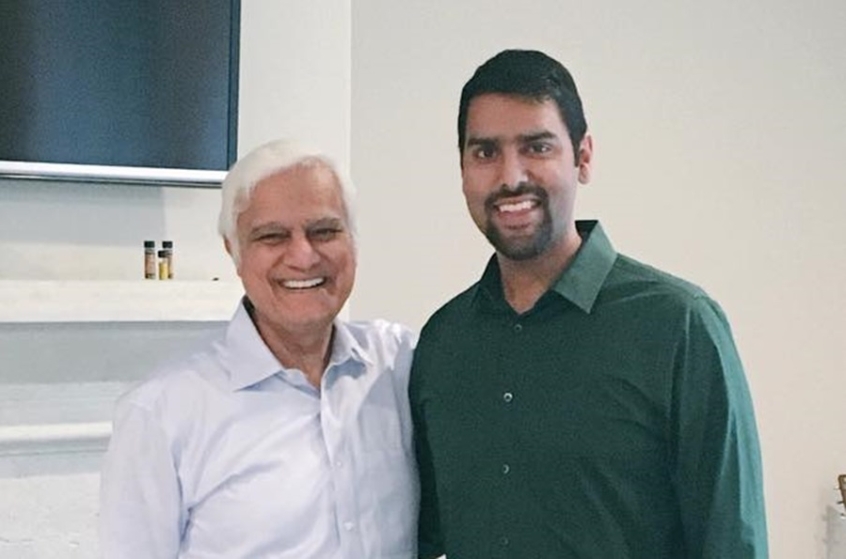
New York Times best-selling author and Christian apologist Nabeel Qureshi is praying for a miracle from God after recent tests revealed that his stage IV stomach cancer has gotten worse, leaving him with nearly a 0 percent chance of recovering from the disease.
Qureshi explained in his most recent update on his battle with the disease that when he was first diagnosed last August he was given a 4 percent chance of recovering. With the latest news he's now ready to explore the world of alternative medicine.
"I haven't even had a chance to process yet the news we've just received," he said, thanking his supporters for all their prayers.
He then explained that he went to the hospital to hear the results of the last scan and "the results aren't good."
"The radiation apparently didn't work too well. The primary tumor has shrunk some ... but the tumor is still there. There's still cancer in the stomach. What's worse is that the lymph nodes that we were hoping would recede haven't receded. So, I'm not a candidate for surgery. And on top of that, the cancer has spread to more lymph nodes now throughout my chest," he revealed.
"We don't know what's gonna happen now. The route to successful medical treatment is chemotherapy, radiation to surgery and if the radiation works then you move on to surgery and we didn't make it past that step. And so, next week we will be meeting with our medical oncologist who will be giving us whatever options we have now," Qureshi continued. "This is about the worst news we've received since we were first diagnosed. And the cancer is now worse."
Turning to his faith, Qureshi compared his situation to Lazarus.
"The first thing that comes to mind is Lazarus in the Gospel of John. Lazarus' sisters were indignant with Jesus for having delayed and Jesus raised him (Lazarus) from the dead. That's kind of where we are now," he said.
"If this be for God's glory it would definitely be more for His glory now because we are kind of past the point of medical treatment or at least past the first line of medical treatment," he added.
Qureshi then showed a bit of emotion when he thought about his daughter not having her father around.
"... can't lose hope, can't lose hope, especially my daughter. I don't want her to grow up fatherless. So we keep praying, we keep pushing. Keep doing what we can," he said.
He explained that he will be making more changes to his diet and explore alternative treatments he's heard about that are being offered in places like the south of France, Switzerland and Mexico.
He said he's received many words from people saying God is going to heal him, but confessed that "those people could all be wrong."
"I'm praying that even if one of them is right then God will come through. I'm waiting for that, hoping for that," he said.