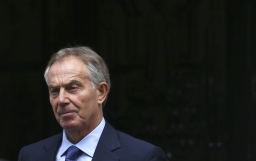
Sir John Chilcot has said that Tony Blair's government agreed to the invasion of Iraq before "peaceful options...had been exhausted" and that military action was "not a last resort".
Sir John's statement to launch his 2.6 million word report, which has been seven years in the making, was met with applause after he also criticised the use of intelligence, the lack of Cabinet consultation and inadequate post-invasion planning.
"We have concluded that the UK chose to join the invasion of Iraq before the peaceful options for disarmament had been exhausted," Sir John said. "Military action at that time was not a last resort."
The comments appear to undermine the validity of a statement made by Blair in February 2003, a month before the invasion when the then prime minister said: "I detest [Saddam's] regime, but even now he could save it by complying with the UN's demands."
On the supposed threat posed by Saddam's Iraq, Sir John said: "It is now clear that policy on Iraq was made on the basis of flawed intelligence and assessments. They were not challenged - and they should have been'.
Sir John added: "In the absence of a majority in support of military action, we consider that the UK was in fact undermining the [UN] security council's authority."
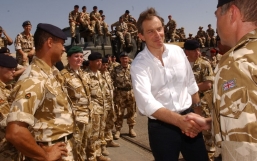
Sir John also criticised the "wholly inadequate" planning for the period after the invasion, which saw 179 British troops being killed by February 2009, 4,491 US service members killed by 2014, and countless Iraqis since 2003.
He went on: "The UK's military role in Iraq ended a very long way from success."
Although the inquiry has not expressed a view on whether or not military action was legal, Sir John added: "We have however concluded that the circumstances on which it was decided there was a legal basis for UK military action were far from satisfactory".
Sir John said that Blair presented the intelligence findings against Saddam "with a certainty that was not justified". He went on: "There was an ingrained belief in the UK policy and intelligence community that Iraq had retained some chemical and biological capability and was determined to preserve and, if possible, enhance them, and in the future to acquire a nuclear capability, and was able to conceal its activities from the UN inspectors...The judgements about Iraq's capabilities in [a House of Commons] statement and in the dossier published the same day were presented with a certainty that was not justified. The Joint Intelligence Committee should have made clear to Mr Blair that the assessed intelligence had not established beyond doubt either that Iraq continued to produce chemical and biological weapons, or that efforts to develop nuclear weapons continued."
The full report can be read here. Tony Blair is expected to hold a press conference later today.