Can Save the Parish, the new campaign launched this month by Church of England traditionalists, succeed?
Save the Parish claims that the CofE's 42 dioceses are increasingly diverting resources away from frontline parish churches into head-office posts with fancy titles smacking of political correctness.
This grievance was aired in an article in The Spectator in February by the Rev Marcus Walker, Rector of St Bartholomew the Great, London, now one of the campaign's leaders.
"There is increasing outrage at the explosion of central positions while parish posts are being cut and at the church's prioritising of trendy causes over actual parish ministry. Southwark (diocese), for instance, has got rid of 30 parish priests' posts in the past decade, but still managed to find room in the budget for a 'Director of Justice, Peace and Integrity of Creation'. They are not alone in this," he wrote.
But even if Save the Parish succeeds in stemming the alleged tide of central posts and re-diverting financial resources back to the parishes, the basic problem will not go away.
And that is the fact that not enough people across England want to go to a parish church on a Sunday.
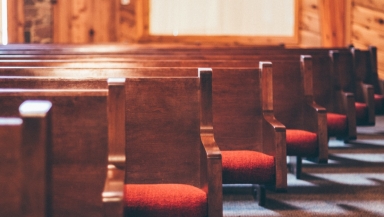
CofE statistics for 2019, before the Covid pandemic hit, showed a Sunday church attendance of 690,000 people, down by 2 per cent on the previous year. There are 12,500 parishes across England, so that works out at just over 50 people per parish in church on a usual Sunday.
And it is worth remembering that many parishes have more than one church. So, churches with an average Sunday attendance of fewer than 25 people are not unusual in the CofE.
Many parishes have people who do not come to church on Sundays but go to mid-week services and events such as 'Messy Church' for children or mid-week Holy Communions. An average of 854,000 people attended services and acts of worship each week in October 2019.
But the official statistics do not make clear what proportion of the apparently extra 164,000 people attending mid-week events were also in church on the Sunday.
The practical reality is that the Sunday congregation is the core volunteer base for a parish church's ministry and mission and the people who give financially. Theirs are the boots on the ground.
I was vicar of a small village parish church for 19 years before I left the CofE in 2019. A year after I went the church received an influx of people - a 'church graft' - led by an ordained minister from a large Anglican evangelical church nearby. He became the priest-in-charge. Without the graft, my former post would have been axed because the church would not have been able to pay enough money to the cash-strapped diocese for a vicar.
For five years before I left, I was acting treasurer for the church because the congregation was unable to provide a volunteer. Fortunately, an accountant from the large church nearby, with whom our church had formed a mission partnership in 2014, drew up the annual accounts for us, bless her. But I had to do the weekly banking and the general financial administration, making sure there was an audit trail for every item on the bank statement.
In many ways, I was a key-jangling caretaker for the church, a bit like Mr Yateman from Dad's Army. This was because the largely elderly congregation needed tables and chairs putting out for their meetings in the Parish Centre, the heating switched on and the toilets kept in working order. It was a privilege to serve Christ's people in this capacity but I was very conscious that I was waiting for the cavalry to arrive.
We tried hard as a church family to reach out to the village with the gospel. But as in many other parishes across the CofE the soil was hard.
Save the Parish may be able to delay the inevitable by getting supporters elected to General Synod, the CofE's governing body, in next month's elections, who could influence strategic and financial decisions centrally. But unless people in England start coming along to local CofE churches in larger numbers and move into committed Christian discipleship including generous financial giving, it is difficult to see how Save the Parish can succeed.
The hard truth is that the deeply divided national Church with its aspiration to have a presence in every local community is running out of cash, active volunteers and, it would seem, the Lord's time.
Julian Mann is a former Church of England vicar, now an evangelical journalist based in Morecambe, Lancashire.