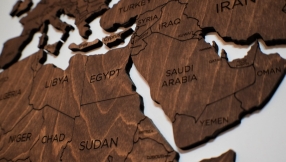
A recent article in The Times details how top private schools, such as Harrow, Westminster and Dulwich, have been quietly making a fortune by setting up branches of their prestigious and exclusive schools in places such as Hong Kong and China, Abu Dhabi and Egypt. The expressed aim is apparently to educate wealthy elites drawn from throughout Asia and the Middle East.
So what's wrong with that, you might ask? It's just a normal example of 'capitalism', with enterprising businessmen taking advantage of obvious educational deficiencies or opportunities overseas so as to make vast, tax-free profits. You might even think, good luck to them!
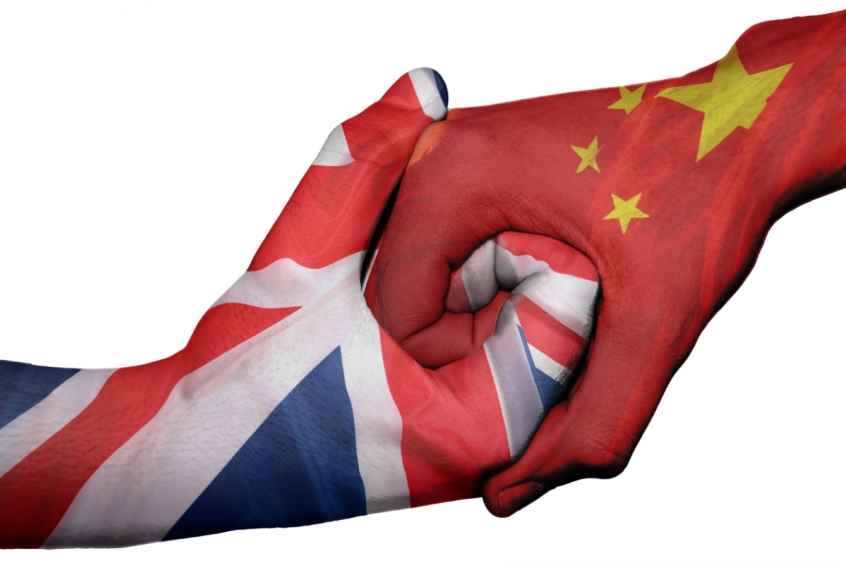
But I fear it is yet another example of the West getting it wrong. Because dig a little deeper, and you discover that to pull off the deal Harrow, for example, has appointed to its board four senior Chinese Communist Party members. There are similar appointments at Westminster, Dulwich and Shropshire's Concord College. Of perhaps even greater concern, however, is the fact that Dulwich, licensed overseas under the subsidiary name Dulwich International Schools Management Ltd, is formally partnered with a China-based sister company, Dehong Education.
Again, at first glance, this may not seem very important but, according to The Times, Dehong lists on its website explicit policies and procedures 'for turning children into members of the Chinese Communist Party ...'. Alongside that, it carries announcements of elections for a party branch secretary and propaganda committee member. Interesting, but it makes one wonder exactly what kind of education is on offer here? Dehong nevertheless claims that, as a result of its partnership with Dulwich, it will be able to place students at top universities throughout the world, specifically, in the UK, naming Oxford and Cambridge, and other Russell Group universities. In other words, in partnership with Dulwich, Dehong is pioneering the worldwide exportation of Chinese Communist propaganda.
There has already been massive Chinese investment in British manufacturing, energy, transport, and telecoms ⎼ as illustrated, for example in the continuing row over Huawei's controversial planned rollout of 5G telecoms networks across the country, and Chinese investment in our steel industry, effectively removing it from British control.
Now, it seems, Britain's top private schools may have found a wonderful investment opportunity to export their brand overseas. But the question must be asked, who is using whom? Exactly who are the exploiters, and who are the beneficiaries, here?
Tom Tugendhat, Tory chairman of the foreign affairs committee, alludes to the risk in his comments to The Times on its investigation.
"Education is one of Britain's great exports but these reports are concerning. British schools which open overseas branches need to be sure that the price they're paying isn't our values," he says.
We seem to have awoken to the dangers of such planned expansionism only recently, but the truth is that our heritage, values, and cultural identity are already under threat.
For, while saying it may not make one popular, in recent years Britain has seen a massive influx of mainly Islamic refugees, bringing with them beliefs that deny the centrality of Christ - downgrading Him to just one among many prophets, subordinate to Muhammad - together with social and cultural behaviours that often sit uneasily alongside Western practice. The questions this raises may not feel comfortable but they cannot be ignored.
Chinese communism pursues a policy of rigorous Christian suppression and a multipronged strategy aimed at global dominance - in a nutshell, China's goal is worldwide totalitarian control. But Islam too envisages a political order in which all humankind acknowledges and accepts Muhammad, and lives under Muslim rule.
It is perhaps no exaggeration to say that 'Britain' as we once understood it no longer exists. At one level perhaps, this doesn't matter, because it is in the nature of things to evolve and 'move on'. If they don't, they die. But what does matter, and indeed is supremely important, is that the foundational beliefs and values of our culture are becoming increasingly subject to erosion and subversion; in some cases, I would venture to say deliberate attack. And, if they are not to disappear completely, we must act now to defend them.
For over a thousand years, Britain has espoused a political and social system derived from our Christian beliefs. It has been the envy of the world, rightly celebrated for its order and justice – its defence of the individual against aggressive and unauthorised State control. Christ calls us to love and treat others as we would be treated ourselves, and to welcome and help those in need. But He does not call us to meekly accept that which may end up, whether by intent or accident, destroying our way of life, values and beliefs.
As Christians, we are called to love, yes, but this does not mean love without discernment. And I fear that if we do not act now to reassert and maintain our values and beliefs, then they will be lost and we will have betrayed Christ.
Rev Lynda Rose is founder of Voice for Justice UK, a group which works to uphold the moral values of the Bible in society.