
The political right in the US has been re-discovering the work of Ayn Rand, a thinker who continues to influence those who consider market forces to be the proper driving force behind prosperity and morality. Rand’s politics reject religion and any form of altruism. Capitalism is the route to morality through the promotion of individual rights.
James Featherby has a different vision. Writing in his new book, “Of Markets and Men”, Featherby outlines his belief in “the market”. He believes in capitalism. He has worked in The City for more than thirty years, advising companies on mergers and acquisitions. His vision is that the nation’s financial sector can work for the good of all. He stands on the conviction that business can be based on public duty. Moral principles, he says, are for the common good and are also good for business. Business is based on trust and trust is based on honesty and mutual concern. So now, Featherby argues, is the time for root and branch change. And he has some practical proposals for how the financial world can be more neighbourly and principled.
Featherby’s first “bold step” is that big businesses should have built into them a public responsibility as well as a private purpose. Most business plans these days will include an “environmental impact assessment”, detailing how a project will minimise environmental damage. In a similar way, this first proposal argues, businesses should consider the social damage of their operations.
His notion of “public duty” is closely related to a familiar idea in business of “corporate social responsibility”. Businesses make statements about their ethical stance and their responsibilities to their employees. Many have good track records on giving to charity. “Of Markets and Men” wants business to take this a stage further - not to see the common good as an add-on, but for all investment to have financial purpose and social purpose, to have goodness written through it like a stick of seaside rock.
Featherby’s three other proposals for reforming business are more technical. He says that debt at personal, corporate and national level is something we can’t ignore any longer. He suggests some novel solutions to reducing the debt in our nation, like giving money to individuals for the purpose of repaying debt, though he doesn’t explain how this could happen without sending inflation soaring. A more reasonable proposal is to use the tax system to discourage businesses from using debt to finance their activities.
The third proposal is sensible and overdue – to discourage financial transactions based merely on speculation. Investment based on what the future markets may produce, such as futures and derivatives, is no more than gambling on people’s actions and often depends on the misfortune of others.
Featherby’s fourth big idea is to put pressure on those who speculate with other people’s money to make sure that money is put to good use, not just to make more money. A lot of talk about ethical investment is about what not to invest in, but the proposal here is that we should focus just as much on the good our investments can do.
The proposals in “Of Markets and Men” are sensible and well-thought out. They carry the values of the Kingdom of God, a kingdom of justice and joy. The world of business, private investment and the money markets are at the cutting edge of our world, and this is the voice of a man who knows what he’s talking about, a man with a godly heart and a godly head.
I have one major concern about “Of Markets and Men”. Can deep-rooted problems really be fixed by rules and regulations? We have seen how the rich avoid paying tax by buying into ingenious tax avoidance schemes. There will always be a way for human selfishness to override regulation. Most people who are drawn to the world of corporate finance have already bought into the dream of personal wealth and a culture that is individualistic, self-seeking and pragmatic. Cultural change has to start with attracting different people, people like James Featherby, into the world of finance.
And that challenge is for the church. Are we as churches encouraging people to make careers in the most significant sectors of our society? Are we growing change-makers who will transform our world? Or will this book go unheeded because good Christian people are unwilling to take the tough option?
"Of Markets and Men: Reshaping Finance for a New Season" is out from the Centre for Tomorrow’s Company and the London Institute for Contemporary Christianity priced £5.99 (ISBN: 978-0-9572949-1-2)
Reviewed by Wayne Clarke, minister of New North Road Baptist Church in Huddersfield
52% OFF

Ekouaer Baggy Bib Overalls for Women - Loose Fit Jumpsuit with Adjustable Straps & 5 Pockets
$12 $24.99
60% OFF

Ekouaer Women's Satin Silky Pajama Set - Short Sleeve Pullover Top & Wide-Leg Pants
$13.99 $34.99
20% OFF

LIVOWALNY 200W Power Inverter for DeWALT 20V Battery - Portable 110V AC Outlet & USB-C Station
$23.89 $29.99
40% OFF

ANCHEER 38'' Toddler Trampoline - 150lb Capacity Foldable Mini Trampoline with Adjustable Handle
$47.99 $79.99
23% OFF

Cordless Fuel Transfer Pump - 3.2 GPM Auto-Stop Pump for DeWalt 20V & Milwaukee 18V
$61.99 $79.99
55% OFF

Ekouaer 3-Piece Maternity & Nursing Pajamas Set - Short Sleeve Top with Shorts and Pants
$14.99 $32.99
20% OFF

EVIQO 48 Amp NACS Level 2 EV Charger - Hardwired Smart WiFi Wall Charger for Tesla
$368.51 $458.55
61% OFF

Uncover Your Genetic Heritage with AncestryDNA Test Kit
$39 $99
18% OFF

Instant Pot Duo 7-in-1 Electric Pressure Cooker - Smart Multi-Functional Kitchen Appliance
$89.99 $109.99
23% OFF

6Ft Power Strip Surge Protector - 6 AC Outlets & 3 USB Ports for Home & Office
$9.98 $12.99
-

Kemi Badenoch: End investigations into Darlington nurses and Jennifer Melle
-

Newsboys launch legal action against MercyMe, concert promoters and media
-

Nick Vujicic responds to rumours he is dead by confirming he is alive and well
-

When the gospel is criminalised, who really suffers the consequences?
News
-

High Court overturns conviction of Christian man who emailed abortion images to police
-

Coptic Christian YouTuber sentenced to five years in Egypt over faith-based online videos
-

Global Christianity faces major challenges in 2026 despite signs of growth, new report finds
-

More details of Steve Maile arrest emerge
-

Enoch Burke saga continues as hearing collapses
-

Christian private school blames Labour's VAT raid as it weighs up closure
Most Popular
News

Kemi Badenoch: End investigations into Darlington nurses and Jennifer Melle
The NHS appears to be resisting the Supreme Court ruling on gender.

Newsboys launch legal action against MercyMe, concert promoters and media
The Christian band Newsboys and owner Wes Campbell have filed a federal lawsuit in Tennessee alleging defamation and antitrust violations against major figures in CCM, including MercyMe and frontman Bart Millard, claiming a coordinated effort to force them out of the concert market.

Nick Vujicic responds to rumours he is dead by confirming he is alive and well
"Although I’d like to go Home, there’s much more work to be done,” the 43 year old said.
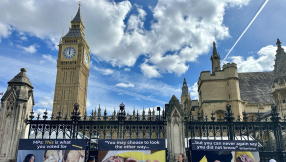
'Sad moment' as abortion up to birth becomes the law of the land
The passage of the Crime and Policing Bill means, among other things, that women who abort their babies beyond the legal limit of 24 weeks will face no criminal sanction.
Ekouaer Baggy Bib Overalls for Women - Loose Fit Jumpsuit with Adjustable Straps & 5 Pockets
$12
Ekouaer Women's Satin Silky Pajama Set - Short Sleeve Pullover Top & Wide-Leg Pants
$13.99
LIVOWALNY 200W Power Inverter for DeWALT 20V Battery - Portable 110V AC Outlet & USB-C Station
$23.89
ANCHEER 38'' Toddler Trampoline - 150lb Capacity Foldable Mini Trampoline with Adjustable Handle
$47.99
Cordless Fuel Transfer Pump - 3.2 GPM Auto-Stop Pump for DeWalt 20V & Milwaukee 18V
$61.99
Ekouaer 3-Piece Maternity & Nursing Pajamas Set - Short Sleeve Top with Shorts and Pants
$14.99
EVIQO 48 Amp NACS Level 2 EV Charger - Hardwired Smart WiFi Wall Charger for Tesla
$368.51
Uncover Your Genetic Heritage with AncestryDNA Test Kit
$39
Instant Pot Duo 7-in-1 Electric Pressure Cooker - Smart Multi-Functional Kitchen Appliance
$89.99
6Ft Power Strip Surge Protector - 6 AC Outlets & 3 USB Ports for Home & Office
$9.98