It is to the great credit of the Church of England that it has decided to publish in full the review by Lord Carlile into its procedures dealing with allegations of child sexual abuse by the late Bishop George Bell. The Church cannot be accused of lack of transparency here!
At the same time, the public reactions of the church leadership to the review will merit scrutiny. So far, the statements published today (December 15) come under the category of recognising that while 'acting in good faith', they should have done better and that lessons will be learnt.
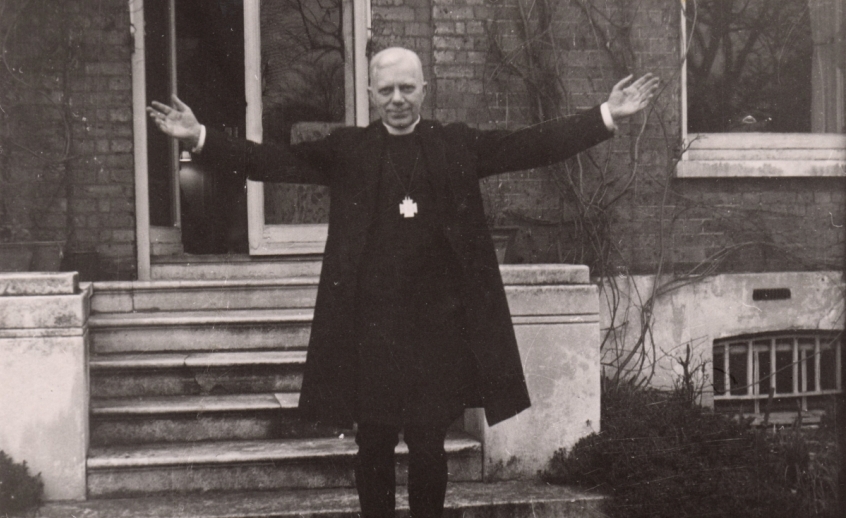
That is verging on blandness. In fact Lord Carlile's review contains a damning catalogue of flawed practices and misjudgments which should be specifically addressed in the interests of integrity.
On Good Friday 2016, regarding the Bell case the Archbishop of Canterbury Justin Welby stated on BBC Radio Kent: 'On the balance of probability, at this distance, it seemed clear to us after very thorough investigation that that was correct and so we paid compensation and gave a profound and deeply felt apology.'
It is now patently clear from Lord Carlile's report that, as the George Bell Group has always maintained, there was no 'very thorough investigation' at all. This should now be clearly acknowledged by the church leadership.
Lord Carlile emphasises that it was not in his brief make a judgment on the truth or otherwise of the allegations against George Bell, but it is quite clear from his review that on several counts Bell's name has suffered a grave miscarriage of justice. Child sexual abuse is a deeply serious matter, and one can only applaud the much more rigorous attention that safeguarding is now receiving in church circles. But no less important is the need to search for the truth in any such case, however difficult it may prove to be.
Those of us who have been concerned for the reputation of George Bell have not been making any special pleading on his behalf: one would hope that, in the best traditions of British justice, all accused and all claimants will be treated fairly regardless of who they are. But in Bell's case it is sadly ironic that one who fought so tirelessly for victims of injustice while he was alive should himself have been denied justice after his death.
Much has been made of the harm this case has brought to the Church of England. But George Bell was not just an outstanding Anglican. He is acknowledged and admired worldwide and in all Christian traditions as one of the greatest figures in the modern ecumenical movement.
There are many beyond these shores and beyond the Anglican Communion who will welcome Lord Carlile's findings, and who will now want to share in the responsibility of continuing to honour him, learn from him and to sing with as great a vigour as ever his hymn 'Christ is the King! O friends rejoice'.
Rev Dr Keith Clements is a Baptist minister and former general secretary of the Conference of European Churches.