In our rambling vicarage garden we have two apple trees and eight chickens. Although a few years ago I built a wire pen for them, the chickens typically worm their way through the fence and dash around the small garden. They spend their days clawing at the garden beds, and crowing for delight, much to our consternation when they make a racket.
As the first one up in the mornings it falls to me to let them out every morning and make sure they are fed and watered; for a chicken, a day without water could be fatal. I also make them rice or pasta, and we save any vegetable peelings and scraps, too. They are the most curious creatures I know; if a visitor comes to the garden gate, the chickens chase him or her up the stairs to our front door, hoping for a treat.
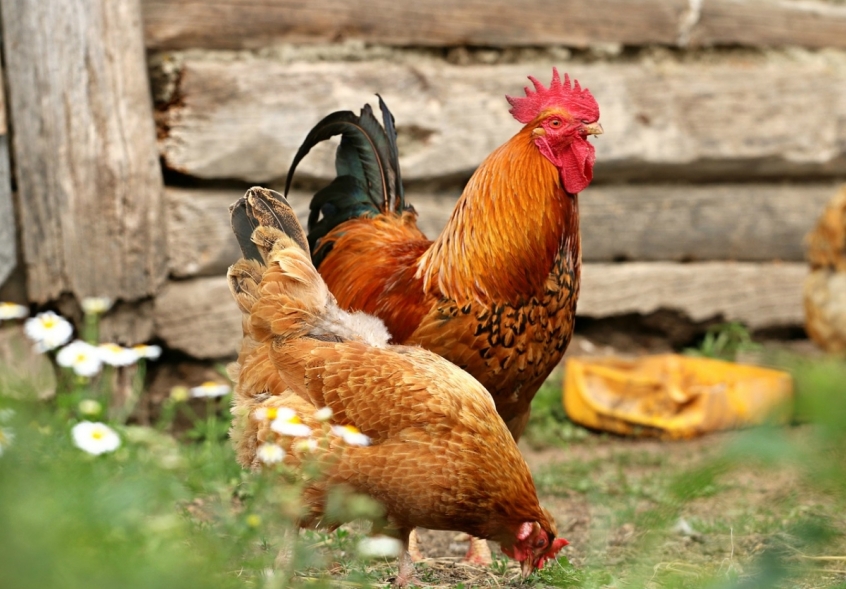
When I think of 'being fed' in my Bible reading, my first thought goes to these animals, which are in the care of my family. After I have looked after the chickens, but before the kids get up, or after they have gone to school, I sit by the window above the chickens and read the Bible. It has often given me pause to think how I am in God's care, and how I, too, am a part of God's wider cycles of life and sustenance. I, too, am fed, every day, as I read and reflect.
The book of Deuteronomy reminds me of my dependence on God's word: 'One does not live by bread alone, but by every word that comes from the mouth of God' (NRSV). The verse is quoted, by strange coincidence, in the same chapter and verse in Matthew and Luke, in Jesus' temptation story in the desert (Matthew and Luke 4:4). In Deuteronomy, the idea is not so much to contrast 'word' and 'bread', but to remind us that God provides both teachings and bread in the wilderness. In fact, the term translated 'word' is simply what proceeds from God's mouth; ie, commandments and teachings.
It is not with bread or manna alone that God provides for us, but also with teachings and commandments. 'The word' is also a means of life, as practical and important as the rice I let cool in the morning darkness for our beloved fowl.
In Deuteronomy, the great collection of laws and commandments, readers are reminded that Israel are not just to be provided for, but is to provide for others. Israel is to love the stranger, because Israel was a stranger in Egypt (Deut 10:19). As I read the Bible in the morning, it reminds me that my time reading is something that sustains me, but it also reminds me that the world needs me. At least, my chickens need me! The Bible reminds me that only I can contribute to the world around me in the way God wants me to.
Although at times my daily tasks can feel like a treadmill, deep down I'm happy to be able to keep this small corner of the world in reasonable (if sometimes squawky) balance. When I read the Bible, I'm reminded that I need God, but also that God needs me: to feed others, to care for the world around me, to do the things that I am able to do, that I was in fact created to do. 'The commandment that I am commanding you today is not too hard for you, nor is it too far away' (Deut 30:11). In other words, I suppose I could say that I'm not just another chicken...I'm able to contribute in my own way, to think for myself and assume responsibility for the lives of the creatures in our garden. The Bible helps me see that, and gives me strength to do it.
Fresh from the Word is a bit like my morning Bible reading, played out across the world. The writers hail from all over, and, like me, bring their daily lives to the Bible. Because the writers reflect honestly on how scripture is woven into their lives, their joys and struggles give me confidence in my daily reading. I'm not the only one to have questions; and I'm not the only one whose life is touched to the quick. As I read Fresh from the Word, it often strikes me that together all readers of the Bible are assuming responsibility for the world we share.
Each of us is called in different ways to the work of feeding, welcoming, teaching, and providing. Truly God is working through us to feed and sustain the world, even as we are fed by others and by 'everything that proceeds from the mouth of God'.
Rev Nathan Eddy is editor of Fresh from the Word, Bible reading notes from the International Bible Reading Association.