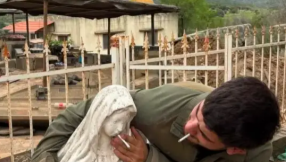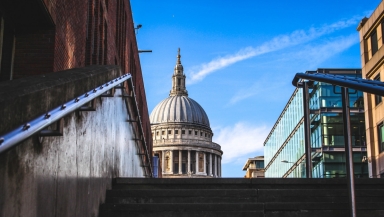
A Russian artist is planning to "drench" St Paul's Cathedral in a projection of blood donated by Afghan refugees.
The blood will be used to fill a sculpture of the royal coat of arms that will then be projected by artist Andrei Molodkin onto the exterior of St Paul's.
Molodkin said his art was a protest against Prince Harry's claims that he killed 25 Taliban fighters in Afghanistan.
The artist told Sky News that he was "very, very angry" about the Duke of Sussex's controversial remarks, made in his bestselling memoir, Spare.
"While in the heat and fog of combat, I didn't think of those 25 as people," the Duke wrote.
"You can't kill people if you think of them as people. You can't really harm people if you think of them as people. They were chess pieces removed from the board, Bads taken away before they could kill Goods."
Molodkin told Sky News, "They read they are just 'chess figures'... for some prince hunting by helicopter.
"It looked like a safari situation.
"How he told it, for him it's like a computer game."
He said he also plans to project a video of Prince Harry onto the cathedral alongside the blood sculpture.