A 1,500-year-old Egyptian papyrus is a magical charm used by early Christians, according to a researcher at Oxford University.
The papyrus was discovered in 1934 during an expedition by New York's Metropolitan Museum of Art but has only now been deciphered.
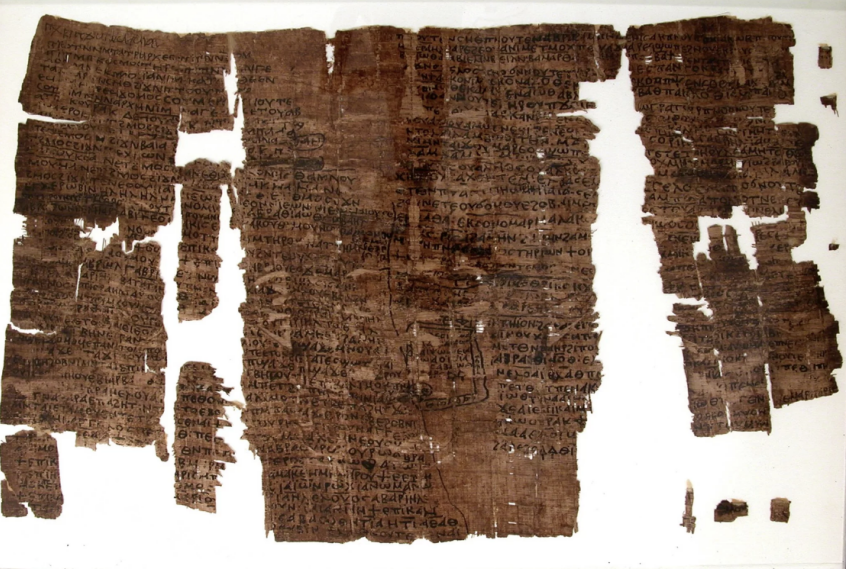
It says: 'God of Seth, God of Abraham, God of Isaac, God of Jacob, God of Israel, watch over everyone who suffers. My word, may it come to pass with power.'
The user asks God: 'May every spirit that is in the air obey me.'
Several times, God is called 'the one who presides over the Mountain of the Murderer'.
In a paper reported by Live Science, Michael Zellmann-Rohrer says the description probably refers to the story of the sacrifice of Isaac in Genesis 22. While in the Bible God intervenes before Abraham carries out the sacrifice, Zellmann-Rohrer says other ancient texts say the sacrifice was completed. 'The tradition of a literal sacrifice seems in fact to have been rather widespread,' he wrote.
The papyrus was discovered near the pyramid of the Pharaoh Senwosret I at a time when Copts lived there. He told LiveScience the papyrus may have been placed in a Christian tomb.
It has little reference to the New Testament and mentions terms used by Gnostics. He suggests the text may have been copied by Christians who 'made use of a textual tradition that owed much to Jewish belief and lore and to Gnosticism'.