Christians make up the vast majority of more than 180 cases brought under Russia's 'anti-missionary' laws since they came into force a year ago.
Prosecutions gathered pace in the first 12 months since being implemented on July 20, 2016, with activities ranging from prayer meetings in homes, posting worship times on a religious website and praying in the presence of other citizens being interpreted as 'missionary activity'.
Figures released by Forum18, a religious freedom organisation in Norway, detail all 181 religious groups and individuals punished by the restrictions and reveal evangelical Protestants make up the majority of those punished, followed by Jehovah Witnesses.
The regulations, officially listed as Administrative Code Article 5.26, Parts 3, 4 and 5, came into force on July 20 and prohibit 'missionary activity' by Russians and foreigners. However the broad definition under Russia's religion law has caused confusion as to what constitutes a 'missionary activity' and in what circumstances believers can share their faith with others.
With fines available of up to 50,000 roubles (around six weeks average wages) for individuals and up to one million roubles for organisations, foreigners can also face deportation and the confiscation of any materials, as in the case of Donald Ossawaarde.
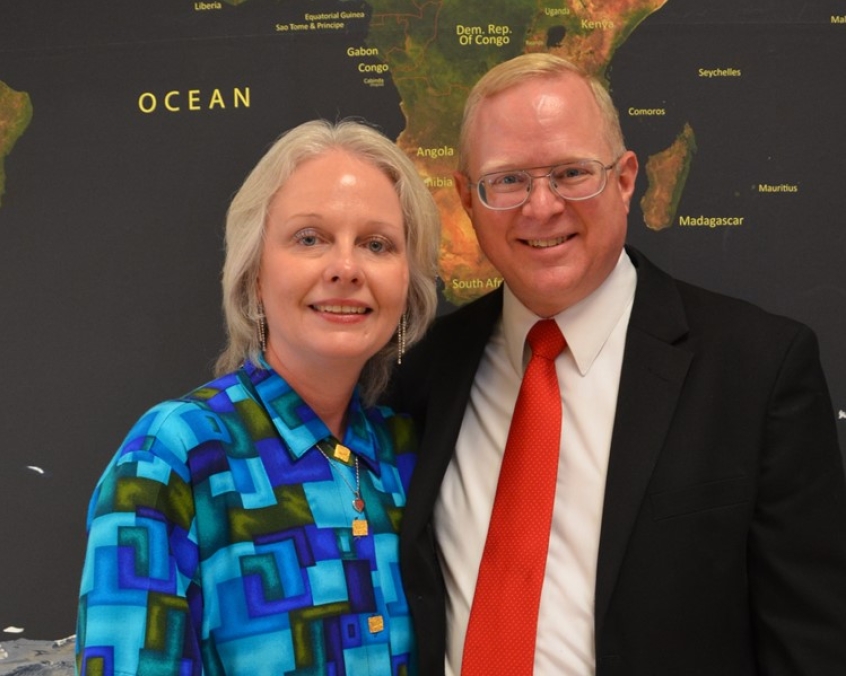
The US Baptist minister was found guilty of 'conducting illegal missionary activities' by holding weekly Bible studies in his home in Russia.
He has taken his case to the European Court of Human Rights, represented by the Alliance Defending Freedom International (ADF), a religious freedom charity.
Ossewaarde is one more than 30 Baptist individuals and groups to be prosecuted under the law as well as more than 35 evangelicals. Others connected to Pentecostal, New Apostolic and Presbyterian churches mean Christians are the largest group targeted by the laws.
But as well as mainstream Christians, more than 40 Jehovah Witness-linked prosecutions were among the 181, perhaps unsurprisingly because of the highly proselytising nature of their faith.
On top of that there were four Mormon-related cases, nine Muslims and more than 10 Hindu-linked prosecutions.
Ossewaarde is among the most high profile cases but as well as headline prosecutions such as his, the new law also requires religious people to acquire official permits through a registered religious group. It also banned prayer meetings from taking place anywhere except buildings that are deemed officially religious, effectively ruling out house group style gatherings.
Earlier this year Russia was for the first time officially included among the worst countries in the world for religious freedom because of its ongoing crackdown against religious minorities, foreign missionaries and evangelists.
The US Commission on International Religious Freedom (USCIRF), which monitors religious freedom violators for the State Department, listed Russia among six new top-tier 'countries of particular concern' in its latest annual report, released in April.
However Russian Vladimir Putin, while overseeing the crackdown on other religious groups, has also drawn the official Russian Orthodox Church into closer ties with the state.
The new closeness between the Church and the Kremlin comes some 26 years after the end of the Soviet-era repression of the Russian Orthodox Church, which has around 165 million members worldwide.
President Putin and Patriarch Kirill, the head of the Russian Orthodox Church, share similar authoritarian positions on human rights as well as issues relating to foreign policy, family values and more.