The US has lost around 7.5 million religious believers since 2012, according to a new survey.
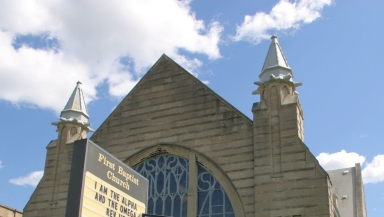
The authoritative General Social Survey conducted by the Chicago-based National Science Foundation found that the percentage of Americans saying that their religious preference was 'none' had risen from single digits in the 1990s to 21 per cent in 2014.
According to Tobin Grant, who analysed the date for Religion News Service, there are now nearly as many Americans who claim to have no religion as there are Roman Catholics – who, at 24 per cent, are the largest single religious grouping. The rise of the 'nones' means that they are on track to become the largest cohort in the US defined by their religion – or lack of it.
More than a third of Americans (34 per cent) never attend a worship service apart from weddings and other ceremonies, a 3.4 per cent increase from a few years earlier.
The percentage who never pray has also risen, now standing at nearly one in six.
By the standards of Western Europe, churchgoing in the US is still at a very high level and religion is deeply entwined with its political culture – it is not yet conceivable that the US could elect an atheist president, for instance. However, the rise in the number of 'nones' is also reflected in the struggles of some evangelical and mainline denominations to attract support. The Southern Baptist Convention, at 15.7 million members the largest Protestant denomination, is also facing declines in the number of members and the number of baptisms. Religiosity has consistently declined in the US since the 1960s.