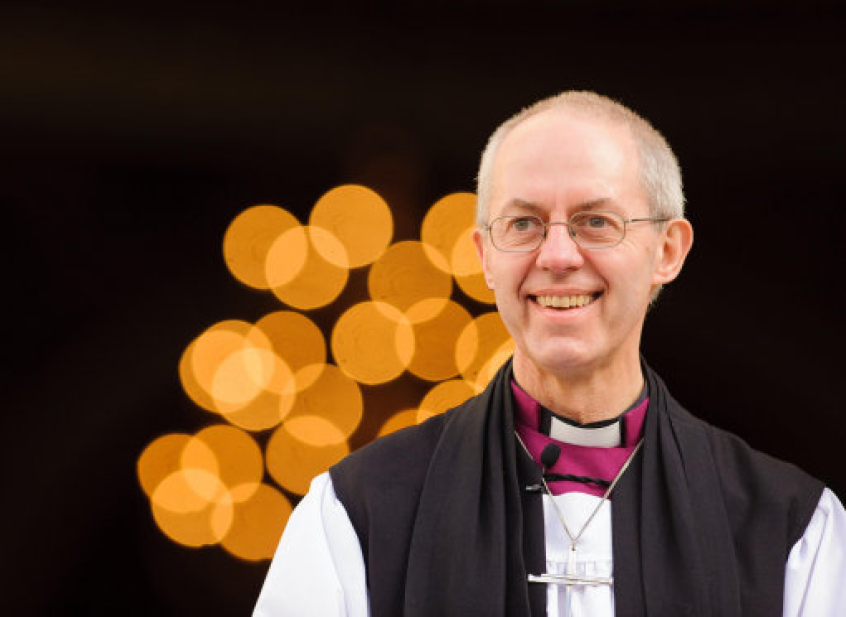
I try and pray for the Archbishop of Canterbury, Justin Welby, most days – and today I want to encourage everyone reading this to develop a similar habit.
Quite apart from any Biblical imperatives in this regard, he has a real plateful of pressing issues with which he has to deal. Let's have a look at some of them in turn.
For one thing, there is the matter of speaking Biblically to the nation in the realm of politics and government. We've seen this recently with the support both he and the Archbishop of York, John Sentamu, gave to a letter signed by 43 bishops criticising planned benefits cuts. (By convention the two Archbishops themselves do not sign such letters – but in this case they have indicated their support).
Archbishop Welby said: "As a civilised society, we have a duty to support those among us who are vulnerable and in need. When times are hard, that duty should be felt more than ever, not disappear or diminish."
Then there is the matter of handling and responding to all the other bishops – be they active or retired. Recently there has been good advice from the retired Bishop of Rochester, Michael Nazir-Ali, who said: "Resources need to be released away from lawyers, experts and civil servants towards... equipping of those in the pew. This will lead to a lightening of bureaucracy at every level and to church gatherings which are characterised by prayerfulness and attention to God's word rather than the 'dead hand' of parliamentary procedure." And there's also been more complex (and somewhat surreal-sounding) advice from the retiring Bishop of Bath and Wells, Peter Price, who reportedly described the church as "perfect in all its imperfections".
There are also, of course, the obvious internal Anglican issues for Archbishop Welby to deal with. In February, the House of Bishops "expressed its encouragement and support for new robust processes and steps in bringing forward to General Synod the necessary legislation to consecrate women to the episcopate" following the most recent meeting of its working party on this subject. Church Society, one of the more conservative groups involved in the latest round of discussions, asks among other things that people "pray for the wider church, for a conciliatory tone and catholic spirit as we continue to work out how to work together despite our disagreements over this issue."
The other obvious internal issue is the Pilling Report due to be published at some point in 2013 which was set up to advise the House of Bishops about human sexuality. In the newly-published biography of Archbishop Welby by Andrew Atherstone, The Road To Canterbury, he is quoted from his days in parish ministry as saying: "Throughout the Bible it is clear that the right place for sex is only within a committed, heterosexual marriage." But there will no doubt be enormous pressure upon him to change.
And then there are the "left-field" issues – the unforeseen ones – with which he has to deal. One wonders what he makes of the recent decision by an independent church plant in Sheffield (itself planted by another independent, non-Anglican, church) to have its minister ordained as deacon of the Anglican Church in Kenya (while continuing to work in Sheffield) by an African bishop. Confused? You're not the only one. When previously Bishop of Durham, Archbishop Welby told his diocesan synod he believed in "holy anarchy," which he described as "anarchy within an organisation, a sense of diversity, of freedom, and empowering that must move us away from a top-down, centralising, managerial approach that is the curse of the Church of England." But would that include such ordinations, one wonders? Either way, let's continue to pray for him.