Up to 500 refugees from Africa died when an overcrowded ship capsized in the Mediterranean near Libya last week, according to the United Nations High Commissioner for Refugees (UNHCR).
The emigrants were reportedly being loaded onto the already-crowded ship from a smaller vessel when the boat sank leaving only 41 survivors.
"As they were transferring people from one boat to another, the boat sank. There was hundreds on there and 41 survived," said Bill Passons, AMG International Director of International Missions.
"It's another tragic situation and it speaks to the desperate situation that people are in and how they are being taken advantage of. They are traveling in conditions that aren't, in any ways, safe,'' he added.
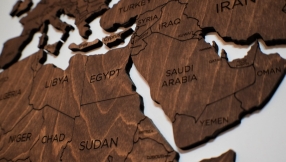
The UNHCR said the survivors—mostly men who came from Somalia, Ethiopia, Egypt and Sudan—were brought ashore in Greece after they were spotted drifting miles out to sea last April 16, Mission Network News (MNN) reports.
"After several hours at sea, the smugglers in charge of the boat attempted to transfer the passengers to a larger ship carrying hundreds of people in terribly overcrowded conditions. At one point during the transfer, the larger boat capsized and sank,'' the report says.
The survivors were among a group of people who departed from near Tobruk, Libya on an unseaworthy vessel.
The incident is considered one of the deadliest to befall migrants to Europe in months.
This year alone, 179,552 refugees and migrants have crossed the Mediterranean and Aegean to reach Europe. At least 761 have died or gone missing attempting the journey, reports MNN.
Last January, 244 refugees and migrants died on the way to Europe via the Mediterranean Sea, according to the International Organisation for Migration (IOM).
"This has happened because many more people are desperate to flee their countries to come to Europe to find a safe haven,'' Eva Cosse, a Greece-based researcher at Human Rights Watch (HRC), earlier told Al Jazeera.
"Even though the distance is small between the Aegean Islands and Turkey, currents are strong and overcrowded rubber boats cannot carry that many people... People are wearing fake life jackets; if there is a shipwreck, people drown.''
Cosse suggested "a collective response'' from the European Union to ensure the safe passage of migrants to Europe to prevent further deaths.
AMG said it is currently working with refugees in Greece to help meet their basic needs for food, water and shelter.