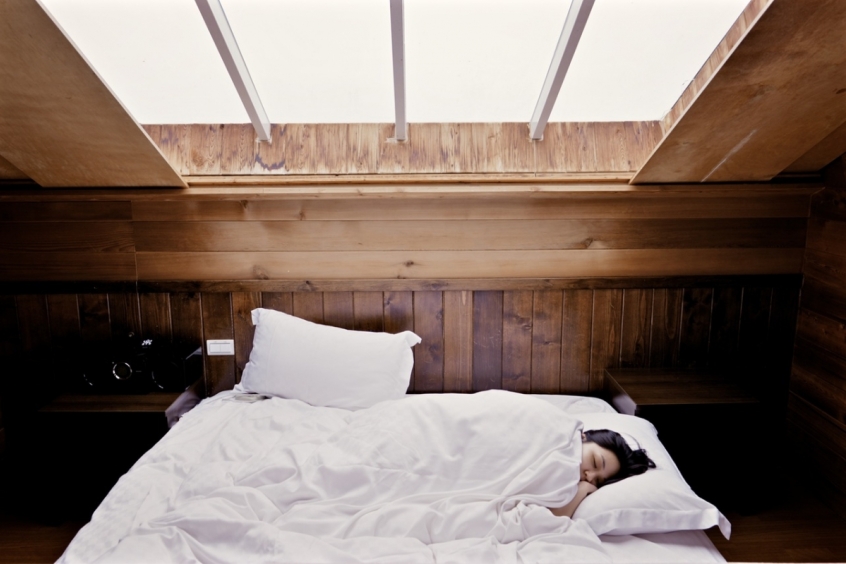
Getting a good night's rest isn't as easy as closing one's eyes and keeping one's mind blank. Sometimes, sleep is so evasive no matter how tired people feel.
Writing for The Huffington Post, Sarah DiGiulio, an expert on the subject, said people need to be mindful of their daily habits because they can have a great impact on their sleeping patterns.
"When it comes to getting a good night's sleep, a few 'musts' come to mind: a quiet room, comfortable bed and plenty of time. But research actually shows that what we do during the day can have as much effect on sleep as anything we do at night," she said.
What are these daily habits? First, DiGiulio said not getting enough sun can be the culprit for lack of sleep. "Several studies have shown that exposure to light in the morning helps reset your circadian rhythm for the next 24 hours, telling you to feel awake in the morning and also to feel sleepy when it's time to hit the pillow later on," she said.
Next, those who hit the snooze button aren't doing themselves any good because they are starting a new sleep cycle that they cannot finish in 10 minutes when the alarm automatically goes off again.
Robert S. Rosenberg, medical director of the Sleep Disorders Centers of Prescott Valley and Flagstaff, Arizona, told CNN that doing so will make people feel groggier throughout the day."You're fragmenting what little extra sleep you're getting so it is of poor quality," he said.
Third, DiGiulio said soda drinkers might find themselves having more difficulty falling asleep. She shared results a new study conducted by Aric A. Prather, assistant professor of psychiatry at University of California San Francisco, which showed that those who drank sugary, caffeinated beverages have fewer hours of sleep at night compared to those who don't.
"Sleeping too little and drinking too many sugary drinks have both been linked to negative metabolic health outcomes, including obesity," Prather said.
Fourth, DiGiulio said smokers typically have more difficulty sleeping because the nicotine found in cigarettes is a stimulant just like caffeine. "Studies have shown smokers are more than four times more likely to report restless sleep than nonsmokers," she said. "Smoking actually changes your body's internal clock, increases your chances of developing obstructive sleep apnea, and causes the average person to lose 1.2 minutes of sleep for every cigarette they smoke."
Lastly, those who use their beds as a breakfast table or office risk fooling their brains into thinking that the bed is not for sleeping.
"You want to associate the bed with sleep," said Jess Shatkin, professor of child and adolescent psychiatry and pediatrics at the New York University School of Medicine. "Just like Pavlov's dogs started drooling when they heard the bell, you want your head to drool for sleep when you see your bed."