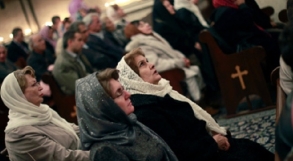
For taking "illegal" Holy Communion wine, three Iranian Christian converts now face flogging as punishment.
The new believers—identified as Yasser Mossayebzadeh, Saheb Fadaie and Mohammad Reza Omidi—were arrested and charged last week with "acting against national security," according to World Watch Monitor.
The Christian organisation—whose mission is to share the stories of Christians around the world under pressure for their faith—notes that although non-Muslims are permitted to drink alcohol in Iran, leaving Islam or converting to Christianity or any other religion is forbidden.
If the three Christian converts are found guilty as charged, they would likely be meted with the punishment of flogging. One of them, Omidi, has already suffered such punishment after being convicted of the same charge in 2012. He received 80 lashes.
The three were arrested on May 13 together with Pastor Youcef Nadarkhani, who was once sentenced to death for apostasy, and his wife, Tina. The couple were released later that day, but the three new believers were locked up in jail.
A verdict on their cases is expected next week.
Since last year, Iranian authorities have already put more than 200 Christians behind bars. At least 43 Christians were arrested in August alone, according to Middle East Concern's Rob Duncan.
"The Iranian regime is conducting a very active campaign against house churches at the moment and leaders of house churches are harassed and put under pressure," Duncan said.
Christians who are languishing in Iranian jails are reportedly being denied medical care, prompting Amnesty International to protest Iran's "cruel" treatment of Christian prisoners. The human rights group cited the case of Maryam Naghash Zargaran, an Iranian Christian who has undertaken two hunger strikes to protest Iranian authorities' denial of her plea for medical treatment for her long-standing but unspecified medical condition.
In October 2015 and in June 2016 Zargaran was briefly released for treatment but in both instances were forced to return to prison even though she was still undergoing treatment. Her health has since deteriorated, according to Middle East Concern.