Excavations in Israel are offering a rare window into Christian pilgrimage in the Byzantine era.
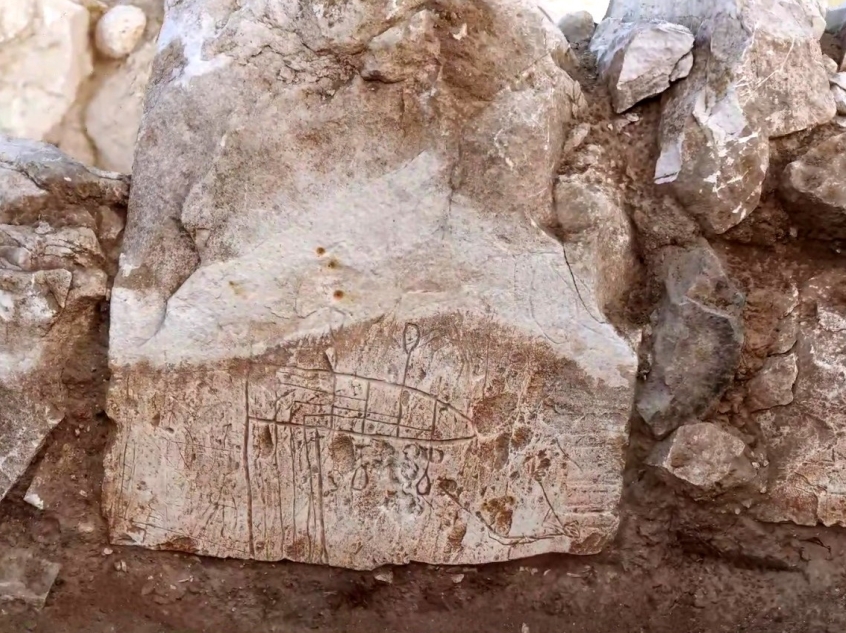
Finds from the dig at a Byzantine-period church in Rahat, in the Northern Negev, have revealed a trove of wall art by pilgrims featuring ships.
"These intriguing drawings may have been left by Christian pilgrims arriving by ship to the Gaza port – their first inland stop was this Rahat church; continuing from here on to other sites throughout the country," excavators from the Israel Antiquities Authority (IAA) explained.
One drawing depicted what appeared to be a two-masted ship, and its exacting details testified to the artist's familiarity with maritime life, but "since the drawing was found upside-down, it seems the person placing the stone during construction was either unaware it bore a drawing, or did not care."
The IAA has been conducting excavations at the site for several years.
"This is a greeting from Christian pilgrims arriving by ship to Gaza port," the IAA said.
"The excavated site tells the story of settlement in the Northern Negev at the end of the Byzantine period and in the beginning of the Early Islamic period. Pilgrims visited the church and left their personal mark in the form of ship drawings on its walls."
The ancient church is located adjacent to an ancient Roman road that led from the Mediterranean coastal port of Gaza to Beer Sheva, the Negev's main city.
"The pilgrims began their pilgrimage following Roman roads leading to sites sacred to Christendom, such as Jerusalem, Bethlehem, the monasteries in the Negev Hills, and in the Sinai," the IAA said.
"It is reasonable that their first stop after alighting from the ships in Gaza port was this very church revealed in our excavations south of Rahat. This site lies only a half-day's walk from the port."
IAA Director Eli Escusido said, "This surprising and intriguing find of ship drawings in a Northern Negev Byzantine-period church opens a window for us to the world of Christian pilgrims visiting the Holy Land 1,500 years ago, and provides first-hand evidence about the ships they travelled in and the maritime world of that time."
The discoveries unearthed by the IAA will appear soon as part of an exhibition on 4 June in the Rahat Municipal Cultural Hall. It will be the first time they have been available for public viewing.
The site was excavated during a city expansion project funded by the Authority for Development and Settlement of the Bedouin in the Negev to add a new neighbourhood for Bedouin residents.